
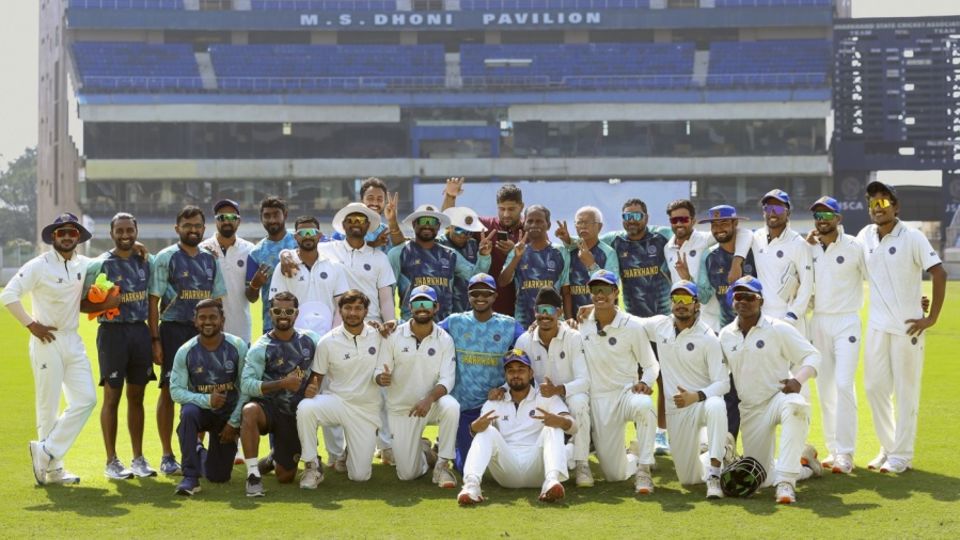



Jharkhand have produced a World Cup-winning captain in MS Dhoni, a 500-wicket first-class spinner in Shahbaz Nadeem, one of India's fastest bowlers in Varun Aaron, and an all-format international in Ishan Kishan. Yet, in more than two decades of Ranji Trophy cricket, they have never reached the final.
Their best performance - the semi-finals in 2016-17 - came with Saurabh Tiwary, Nadeem and Ishank Jaggi among the players. Nearly a decade later, Tiwary is secretary of the Jharkhand State Cricket Association (JSCA), with Nadeem serving as joint secretary. Having produced international cricketers for years, Jharkhand now want to claim the only senior men's trophy missing from their cabinet.
Last season offered encouragement. Jharkhand won the Syed Mushtaq Ali (T20) Trophy, their first major domestic title since the Vijay Hazare (List A) Trophy in 2010-11. Their Ranji Trophy campaign, however, ended in the quarter-finals against the unfancied Uttarakhand.
Recommended Read


For Tiwary, the distinction between producing talented cricketers and building a winning team comes down to what players do when matches are on the line. He wants to see more performances that influence results, particularly in the red-ball format.
"Talent comes last in my books," Tiwary tells Cricinfo. "There are players who perform well individually but do not help their team win. If a player's performance helps the team win, it means he has both talent and the ability to deliver when it matters - and that is the criterion we are following now."
Assistant coach Sunny Gupta echoes Tiwary's sentiment: "We have never had a talent problem in the Ranji Trophy or Jharkhand cricket. The problem was that we lacked discipline and direction. There was not enough clarity about what a player needed, how he should prepare, and what kind of off-season camp he required."
Gupta has also tried to change how players deal with failure. He believes that when every poor performance threatens a player's place in the side, the instinct to protect one's own position can take precedence over the team's needs. "We are trying to create a good coaching environment where everyone feels that this is their team. And that they are playing for the team, rather than simply trying to survive until the next match."
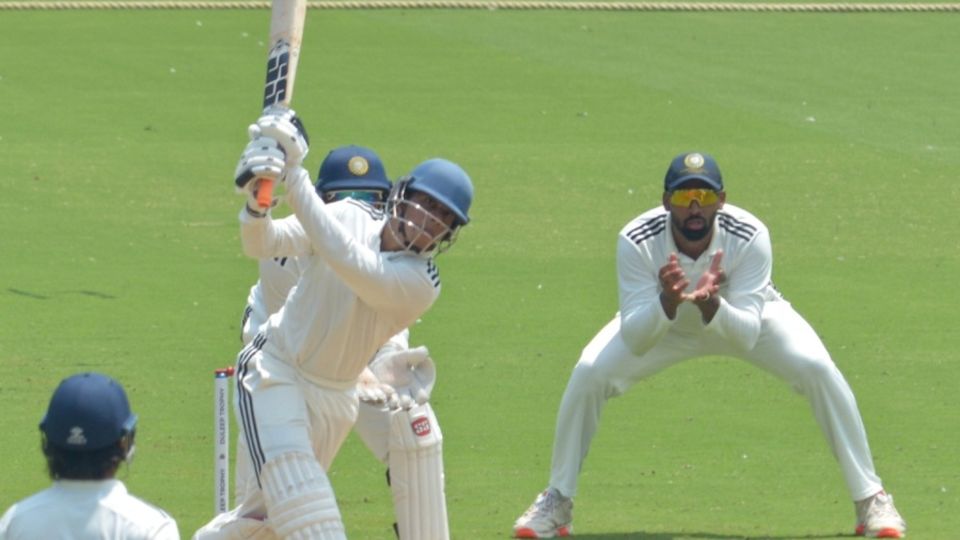
That thinking has involved moving players around - not for their own growth, per se, but for the team's end goal. Kumar Kushagra, who had largely batted at No. 5 or 6, was promoted to No. 3 because the coaches felt his technique and ability to bat long suited the position. He made 234 off 367 balls against Baroda last season. Shikhar Mohan has been given time to establish himself in longer-format and one-day cricket before being introduced to T20s. Anukul Roy, whose progress had slowed after his India Under-19 career, spent several months working closely with Gupta and has started to show signs of renewed vigour.
Jharkhand have also tried to prepare their players for the vastly different conditions they might encounter across India. During the monsoons this year, Jharkhand travelled to Chennai for a four-week camp, with some sessions held around noon in the intense heat. Another 20 days of training followed in cooler Karnataka. Back home, the team practised on green pitches in Ranchi and turning tracks in Jamshedpur.
Head coach Ratan Kumar, who estimates that he has worked with 70-80% of the current senior squad since their age-group days, believes those preparations must ultimately show in how players handle difficult passages of play.
"When the team is in a difficult situation, does the player have the character to stand up and prove himself," Ratan says. "When the team is under pressure and the player is under pressure, can he deliver?"
Tiwary has also introduced performance-linked incentives for coaches and selectors, partly to discourage favouritism. But he is reluctant to claim that Jharkhand's recent progress began with the current administration.
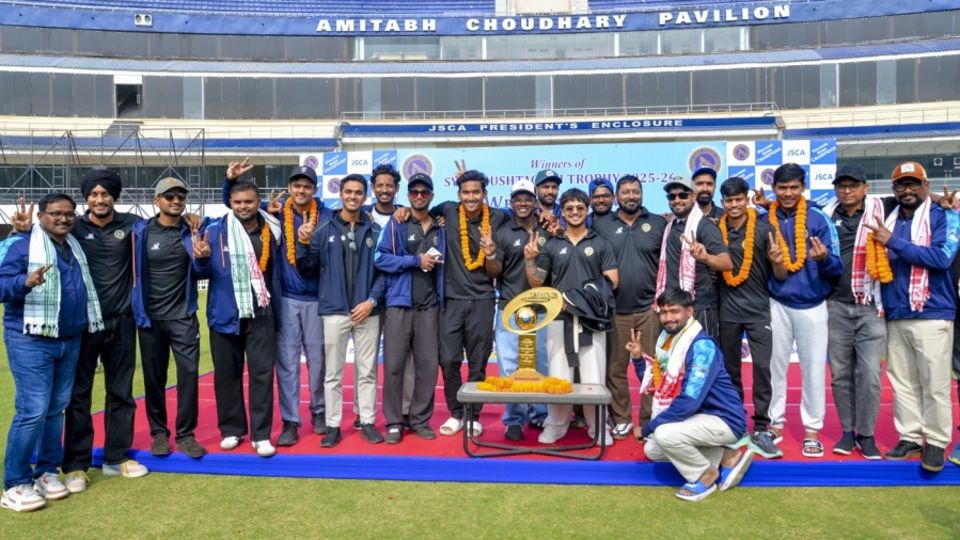
"Did this happen all of a sudden because my former team-mates and I became part of the management? Cricket does not work that way. We do not have a magic wand," he says. "What we do have is years of experience playing cricket, and we are putting that experience to use."
Jharkhand are taking steps towards their goal, but sustaining that progress will require greater depth when their leading cricketers are unavailable.
Kishan is on India duty. Kushagra has earned his maiden senior India call-up. Mohan has been selected for India A for their last two four-day matches against New Zealand A. Jharkhand could be without three of their leading batters for the next round or two of the Ranji Trophy, a problem that could recur as more of their players graduate to higher levels.
"I am happier to see these players representing India A and playing in competitions such as the Duleep Trophy than I would be simply winning a trophy," Gupta says. "For a coach, having five or six players progress to India A or the Indian team brings greater satisfaction than winning one trophy."
The association is working towards creating a pool of 60 players competing for 15 spots, but building that depth presents its own challenges in a state as diverse as Jharkhand.
From the coalfields of Dhanbad and the steel town of Bokaro to Ranchi and districts such as Gumla and Simdega, players arrive with different experiences of coaching and organised cricket, as well as different languages and dialects. Bringing them together under a common system is part of the challenge. The JSCA International Stadium in Ranchi, with its year-round access to coaches, physiotherapists and training facilities, has become central to that effort.
Dhoni, too, remains involved, albeit quietly. He occasionally visits the JSCA complex for gym sessions or a bit of a hit out, observing younger players from a distance. When someone catches his eye, he passes on a recommendation to Tiwary, who prefers to keep those names private rather than place early expectations on the youngsters.

For all the work going into building a stronger squad, Jharkhand's latest Ranji Trophy campaign has begun modestly, despite a promising build-up. Earlier this month, an East Zone side dominated by Jharkhand players and support staff won the Duleep Trophy. But Jharkhand have struggled to carry that momentum into the Ranji Trophy, taking a first-innings lead in a draw against Kerala at home before conceding one in another draw against Maharashtra in Pune.
The two matches have, nevertheless, offered a glimpse of the batting depth Jharkhand are trying to build. Mohan has scored 127 and 143, while stand-in captain Virat Singh made 108 against Kerala. Aditya Singh, batting at No. 7, struck 147 and spin-bowling allrounder Utkarsh Singh contributed 71 and match figures of 5 for 84, earning the Player-of-the-Match award, in that same game.
The individual performances have been encouraging. Turning them into victories, particularly when the side is missing established names, is the challenge.
Matches against Delhi and Odisha now offer opportunities to put their campaign on firmer footing before the Ranji Trophy pauses for the Syed Mushtaq Ali Trophy, where Jharkhand will defend their title, and the Vijay Hazare Trophy in December. The red-ball competition will resume in January 2027.
By then, Jharkhand might have more players pushing for higher honours and will rank as among the favourites for the white-ball tournaments. Both would be achievements worth celebrating. But neither would answer the question that has followed Jharkhand through more than two decades of Ranji Trophy cricket: when will all that individual talent translate into a team capable of going all the way?