


Eight years after being built from the ground up, cricket is an underdog in northeastern India, and the northeastern states are underdogs in cricket in India.
There is an ongoing search for a breakthrough moment, amid their journey towards establishing systemic stability. Yes, producing Test players and winning championships are long-term ambitions, but they are effectively pipe dreams without pathways, facilities, and people working cohesively to get there.
The six states that make up the North East Zone in India's domestic circuit - Arunachal Pradesh, Manipur, Meghalaya, Mizoram, Nagaland and Sikkim (Assam and Tripura are part of East Zone) - are trying to secure basic requirements: identifying and nurturing talent, building and maintaining infrastructure, and having good governance and administration in place. The rest is decided by the states' priorities. Sikkim, for instance, have six video analysts - one senior and five junior - as their coach Sonam Bhutia says, but Nagaland, much to batter Rongsen Jonathan's frustration, have none.
Recommended Read

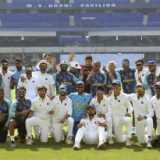

There are limited resources to work with, and trade-offs are inevitable. Not everyone within the system is affected the same way or to the same degree. Like Hokaito Zhimomi, Nagaland captain in the ongoing Ranji Trophy edition, who is unbothered by the absence of video analysis.
At the top level, Jonathan says that the northeast's players are still acquiring the skills, but are unable to roll with the punches. "Every game, it doesn't go how you like; from there to bounce back, to respond to the situation, that's where most of the northeasterners are lacking. Instead of pressing the panic button, to have a solution - plan A, plan B, plan C - we're lacking there because of less experience."
Cricket still not the sport of choice
Football is the primary team sport in the region. Kids don't grow up playing cricket like they do in what the northeasterners refer to as mainland India, so the states have to go the extra mile to introduce cricket to them and retain them in the wider pool.
"Such state cricket associations need to work on their numbers; northeast states are struggling to find [players]," Saba Karim, former India cricketer and BCCI general manager of cricket operations from 2017 to 2020 (when the northeastern states came into the fold in the senior domestic competitions), says, "There is a lot of work to be done at the grass-roots level. The only way to increase numbers is to have some outreach programme that includes men and women cricketers.
"Once you have the numbers and systems, then you can have tournaments [for different age-groups and levels]. That's how you build competition and find quality. If you have transparency right through, it helps states to build strong state sides."
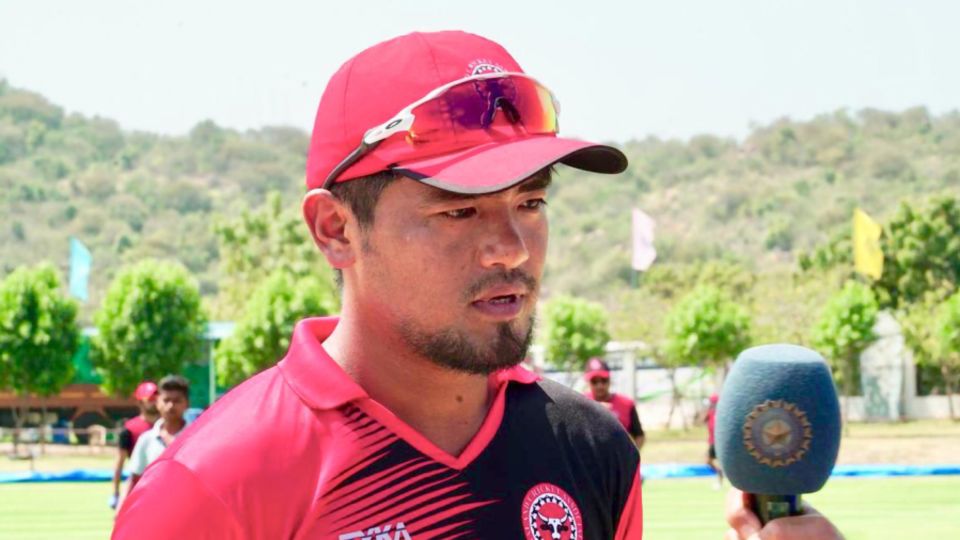
Albeit not robust yet, there is a pathway for kids to start from the school level and move into age-group teams and then progress to the state team.
"We have inter-district tournaments, from there we pick probables, about 30-35 players," Jonathan says. "Then there are a few matches, practice sessions. From there they'll trim out 15 players, maybe 20-25 players for the whole season, and rotate the players according to the format."
There are more kids enrolling in the sport than ever before, but academies can be expensive and aren't as well-equipped as they are in other, more cricket-focused, parts of India. At the higher levels, club- and division-based cricket aren't pervasive across states.
Women's cricket, which was essentially non-existent till 2018, when northeast states entered the Indian domestic scene on the back of the recommendations made by the Lodha Committee, now has teams at the Under-19, Under-23 and senior levels. They, along with the boys, are getting assistance from Railways and are moving up slowly while contending with obstacles.
A Centre of Excellence for the northeast?
Not everyone can afford to play cricket, especially batters who need equipment and a lot of coaching. The ones who are able to afford it, Jonathan says, go to bigger cities to academies or training camps to get a better shot at improving their skills.
If they stay in the system and move up, there are differences between them and mainland players to contend with. Players from the mainland grow up within a cricket culture - with prominent cricketers around to help them - and the best ones are more well-rounded. They often have their techniques, fitness, support systems and lifestyles in order, and the differences - technical, tactical and mental - show on the field across levels.
The infrastructure in the northeast is improving. There are more nets and gyms, swimming pools, grounds, indoor facilities - which are because it can rain for even six months every year in the region. Some of these are only available to state players, but it wouldn't be far-fetched to think this would trickle down to the lower levels in time.
"I was talking to [VVS] Laxman sir [head of the BCCI's Centre of Excellence (CoE)] and our leaders from northeast," Bhutia, who has also coached East Zone, says, "[and told them] we should propose something like the CoE for northeast cricket. If that comes, then there's consistency.
"We can have a centre for rehab also. We have lost many potential players due to injuries over the years. A centre offers a tracking of pathways and the entire northeast cricket will be under good guidance. We can have our own ecosystem where our players will feel secure."
'We should play, win, and go to the next level'
Northeast's story in the national framework started in 2018. The efforts of getting it up there had started much before that. Mamon Majumdar, who is part of the IPL Governing Council, has been with the Cricket Association of Mizoram (CAM) since its inception in 1992. There were two or three cricket clubs at the time, but the number has now swelled to around 50, clubs that participate in local tournaments.
Majumdar recalls, with a chuckle, instances of chalking up budgets of INR 22 lakh when they had INR 7 lakh in their pockets, not knowing where the rest of the money would come from, and cheers up proper while mentioning how they would still conduct the tournaments as envisaged.
Earlier on, Majumdar says, they somehow managed to put administrative structures in place, but paying the staff salaries was a challenge. And employees had to perform multiple roles.
The roles were primarily in the cricket operations team - they primarily prepare calendars, allot matches across venues; the game development team - which looks after academies and talent, and the finance team. There are no such workarounds needed now with the BCCI money coming in regularly.
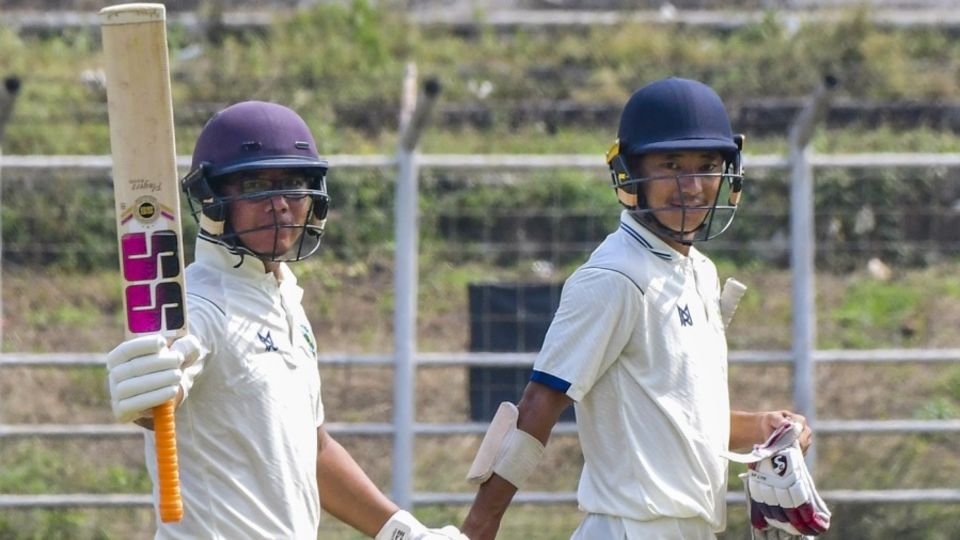
If someone wants to become a secretary in CAM, the post Majumdar has held, the candidate has to be a representative of and get a nomination from a Full-Member state. There is an election process every three years.
The candidates don't necessarily need to have cricketing experience. Karim says having administrative and corporate skills and a vision to grow the game are more pertinent in an administrator. "Most state structures have office-bearers and people to run it. The office-bearers empower certain individuals in the organisation to run cricket affairs for them. That is how you have various committees."
Once set, the office-bearers and committees look to ensure the systems are working, on and off the field. They take feedback from coaches, committees and make decisions.
"The performance in the BCCI tournaments is one criteria," Majumdar says when asked how progress is judged. "Maybe [we did] not [get] the win but the performance of the players is improving, we compare that, then we try to push our players.
"All northeast [officials], we sit together every year and we discuss what's going on in which state, which states are doing well or aren't, and we bounce suggestions and solutions among ourselves. We talk among ourselves, that we six [states] should always be moving forward together. We are trying to ensure that we aren't just taking part. We should play, win, and go to the next level."
A question of priorities…
At the senior level, northeastern states have not had much success. Since 2022-23, when the promotion and relegation system was introduced for the Elite and Plate Groups, Manipur (2023-24) and Meghalaya (2024-25) made the Elite group once each, while Nagaland (2022-23 and 2025-26) have made it twice.
"The first time we struggled big time," Jonathan says. "The level of cricket we were playing in the Elite Group, it was very difficult for our state to compete. But last year, we drew the games against Tamil Nadu and Andhra. It was the first time that we drew against a big team outside the northeast.
"It was because after playing for four-five years, the players are improving and know how to play the situation, how to spend time at the wicket, and other rituals of cricket. Slowly, we were able to compete with the bigger teams."
From a regional perspective, North East Zone have had two draws and two losses in the Duleep Trophy, the latest of which was an innings defeat to East Zone in Bengaluru this season. They had East Zone in trouble at 138 for 5 on day one, but the pitch flattened a bit after that and Sudip Kumar Gharami and Shahbaz Ahmed took control.
"When Shahbaz (who made 167) was playing, we didn't know his weak points," Jonathan says. "We didn't know where to bowl to him. We just came, bowled good lengths, but he was playing even the good-length balls from spinners off the back foot. So the spinners then think 'we must be bowling short', and when they bowl a bit [further] up, it was a nice half-volley."
They learnt between days one and two that the spinners were bowling a little slower than ideal, which allowed Shahbaz to adjust. But by then, as Jonathan says, the damage was already done. The proactivity and match-awareness that's needed for players to come up with solutions on the go comes with experience, something the first and maybe even the second generation of players might have to contend with.
To think of such challenges is to deal with complexity, which can't be addressed meaningfully in isolation. Yet, results are results. The region can't lose sight of reality or the dreams they harbour; they can't let go of one to get the other. That's the Catch 22.
****
"For northeast cricket, at the moment, we can regard this [Duleep] as the World Cup for us," Bhutia says. "Ranji, though it is highly ranked, we mostly play among ourselves."
In 2025-26, only the winners of the six-team Plate Group were promoted to one of the Elite group. In the three years prior, both the finalists were promoted. That reduces the chances of teams in the Plate group getting experience in the Elite group, as Manipur - who lost the Plate final last year - found out last year..
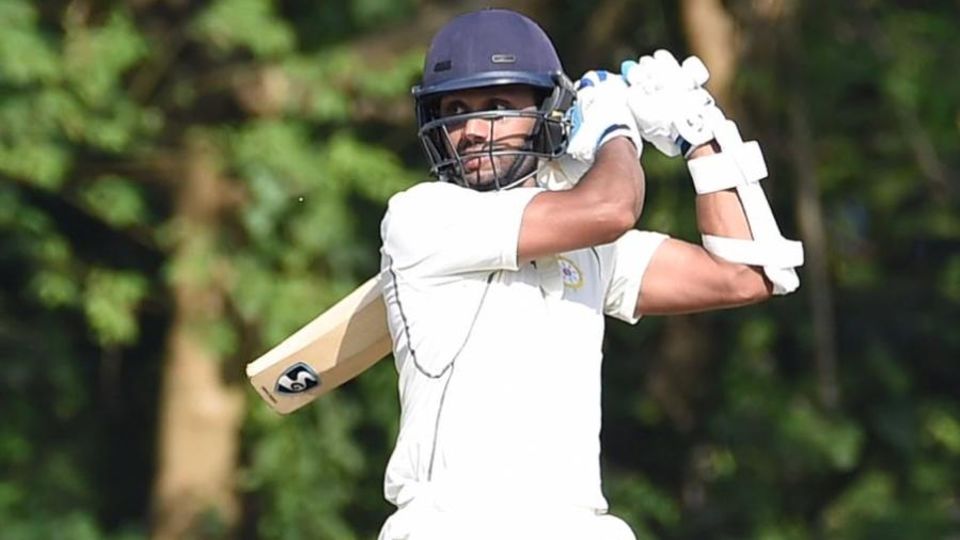
Cricket is an underdog in the northeast, and northeast teams are underdogs in Indian cricket. Yet, to think of their story as just one of underdogs vs top dogs would be both wrong and overly simplistic. They have to be mindful of their limitations while looking to work their way out of them.
Northeast India was sidelined for over eight decades in the Ranji Trophy and in the national cricketing consciousness. The effects still linger. Overt focus on conjuring world-class players or winning titles, despite being reasonable goals at the surface, fail to acknowledge history or provide duty of care that every state should be afforded to make them feel part of the whole.
As Jammu & Kashmir and Auqib Nabi proved last season, the breakthrough can come anytime, anywhere. The question is whether the underlying pathways, facilities and people get due attention and credit not just when they get there, but when they don't.
What is, and hopefully will remain, unchanged, regardless of time and results, is the bond the states share geographically and culturally, that has found its place in the region's cricket as well.
"The entire northeast, we are all under one umbrella," Zhimomi says. "So, it doesn't matter where he or she [player] belongs to. I'll be really happy if anybody from northeast [makes it big]."