


"As long as the red dice are in the air, the gambler has hope. And hope is a wonderful thing to be addicted to" - comedian Norm Macdonald, in his memoir, Based on a True Story.
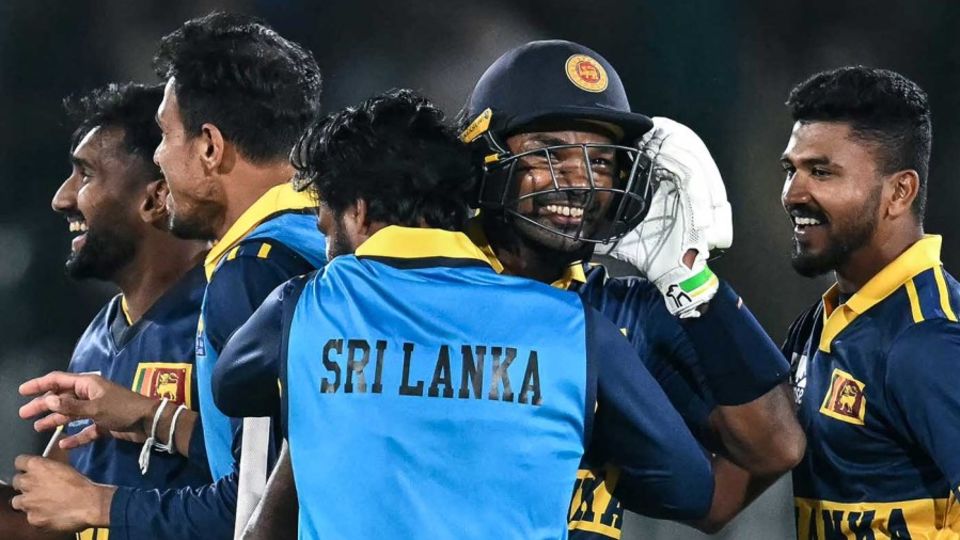
Dormant WhatsApp groups are suddenly flashing awake. People who hadn't tuned into a Sri Lanka cricket match in months - maybe years - are overflowing with belief. In the morning, offices and schools will genuinely buzz with chatter about the national team. There are even reports that local Oktoberfest festivities paused, music and all, just to watch the final overs of a quite preposterous chase.
This was not normal. Nor was it abnormal - for that would suggest a precedent exists. No, this result was ethereal. Even now, it is difficult to quantify the magnitude of the knock-on impact a performance like the one Sri Lanka produced in Rawalpindi on Thursday could have.
The base facts alone are astounding: the second-highest successful chase in ODI history, and Sri Lanka's highest by a country mile. Prior to Thursday night, Sri Lanka had only once scored more than 330 batting second. To put it in sharper perspective, they had cleared the 350-mark just three times in the entire past decade.
Recommended Read
This is a Sri Lankan batting unit that has discovered so many unique avenues down which to falter over the last ten years that collapsing has practically become its resting state. And as Harry Brook walked off having struck the fastest double-century in ODI history, that same Sri Lankan side had just absorbed the hardest, most unchecked body blows from the most in-form white-ball team in the world. England, and Brook, had emptied the clip.
If hope was already a scarce commodity among Sri Lankan fans, an innings like Brook's was precisely the sort of thing to tip the scales toward gallows humour. The "Stop… stop! He's already dead!" Simpsons meme springs immediately to mind. This was a mountain so steep that few would have fancied Sri Lanka scaling it even with twenty wickets in hand.
Yet, therein lay their liberation. Stripped of the weight of expectation, they played with total clarity. Dasun Shanaka, who hit 97 off 50 balls, admitted as much after the match: "If we lost tonight we would have been almost out of the competition, so it was all about the mindset."
Yes, the mindset. A clip recently went viral on Sri Lankan cricket X showing head coach Gary Kirsten pointing to his temple after Shanaka was dismissed during their ill-fated chase against Pakistan in the tournament opener. At the time, fans used it as a stick to bash Shanaka for a perceived lack of game nous.
But perhaps Kirsten was alluding to something deeper: the ability to maintain calm under pressure, to execute skills when they matter most, and to find clarity of thought amidst the noise.
That dynamic is a microcosm of sports fandom itself. As observers, we base our entire judgment on on-field actions. We construct elaborate analytical narratives and load players down with our own expectations. Player X can't play spin. Player Y lacks a power game. Player Z can't hit down the ground. Often, these judgments are backed by data, and they might even be true. Yet, for all our spreadsheets, there remains the inherent human capability to surprise. For a team to surprise.
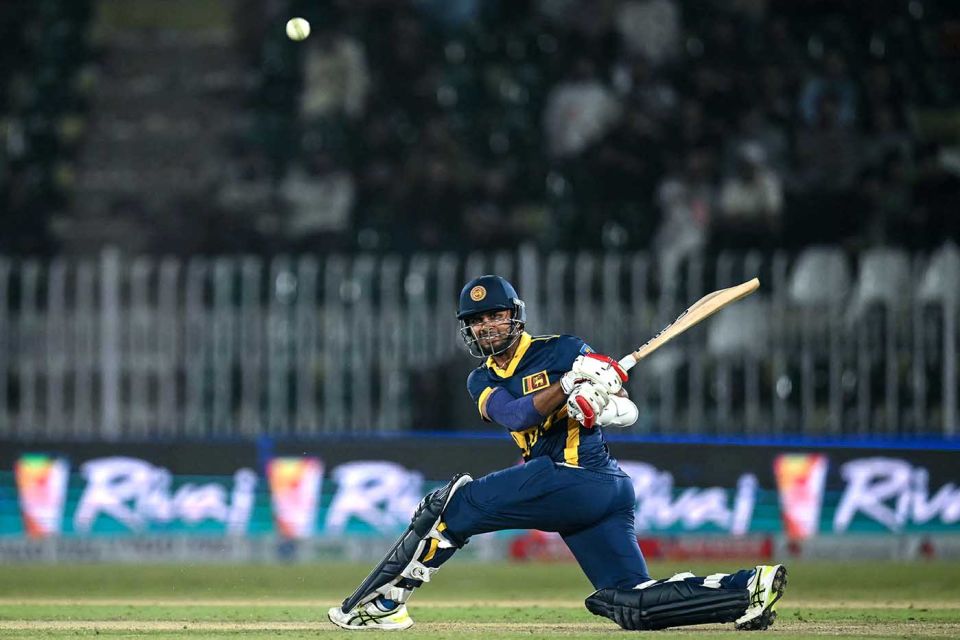
And how gloriously Sri Lanka surprised us all.
The golden rule of chasing a massive total mirrors any monumental life task: break it down into micro-objectives. Sri Lanka's solitary goal was simply to stay alive in the hunt, and they did so in a manner no one could have anticipated. Despite losing Kusal Mendis for a diamond duck, run out at the non-striker's, and playing without the injured Pathum Nissanka - the usual catalysts for their rare high scores - Sri Lanka stitched together a textbook chase.
Needing roughly a boundary an over, they failed to find the ropes in just 12 of their 50. They cleared the boundary more times than England, faced fewer dot balls, and ransacked 261 runs through the middle overs, bettering England's middle-over period effort by 42 runs. It was this sustained urgency that ultimately made the difference, mitigating the otherworldly final-ten-over onslaught where Brook extracted 156 runs for England.
To borrow a phrase from Moneyball, Sri Lanka had replicated Harry Brook in the aggregate.
But this isn't just about the mechanics of one of cricket's greatest-ever run heists. It is about what this victory symbolises for the future of Sri Lankan cricket.
It is fitting that this win arrived the very same week a new cricket constitution is being evaluated by the nation's highest court. The belief that the game must be fixed off the field before it can flourish on it has been the defining mantra of the Cricket Transformation Committee. It isn't entirely wrong. Sri Lankan cricket has long been weighed down by a bloated domestic system, antiquated coaching methods, and pitches unfit for modern development. Consequently, it has churned out a generation of cricketers detached from the modern demands of white-ball cricket.
Even their recent successes have come with caveats. Wins against top-tier nations traditionally happened on slow, low, turning surfaces at home that mitigated skill gaps. Where Sri Lanka never triumphed - or even looked competitive - was in a modern-day slugfest; the high-scoring feasts that elite white-ball teams frequently tuck into.
That is why, when Sri Lanka failed to chase a modest 300 against Pakistan earlier in the tournament, the public reaction wasn't outrage, it was apathy. The same numbness that settled in while the team was beaten home and away by England over the past year.
But against those same English giants, under the most unimaginable pressure, Sri Lanka proved to the world - and perhaps more importantly, to themselves - that they can still box with the heavyweights.
There will undoubtedly be more ups and downs. Kumar Sangakkara rightly cautioned after the match about the immense work that still lies ahead, a sentiment Gary Kirsten will surely echo in the dressing room. But for the first time in a very long time, the dice are in the air. The addiction is fed. Hope is renewed.