
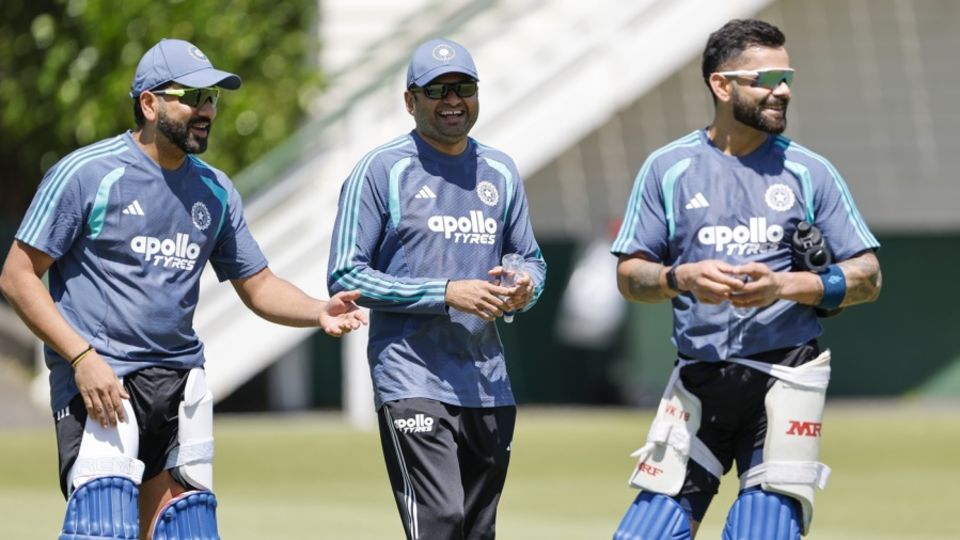


India have ended New Zealand's streak of 11 successive victories in home ODI series, winning a rain-affected series 3-1 on unusually seamer-friendly pitches. With less than a year to go for the start of the 2027 World Cup, what have they learned?
Ko waxes, Ro wanes
Virat Kohli played the innings of the series in the first ODI at Eden Park, a 51-ball 74 full of audacious drives on the up and a dazzling array of pulls. He didn't get into double figures in any of the other matches, but sometimes you can be in the form of your life and run into challenging conditions or unplayable deliveries or - as in the case of the in-seaming Matt Henry shooter that bowled him in the fourth ODI - a combination of both.
Rohit Sharma, on the other hand, endured a tough time from start to finish, and even if he came into this series with two hundreds and a 92 in his last four ODI innings, he has not looked like the world-beater he was in the format until last year's Champions Trophy. Is he still one of India's two best ODI openers, and are the selectors and team management still confident he remains the right man for the job at next year's World Cup?
Axar - imperfect solution to a difficult problem
India have floated Axar Patel up the order with quite a bit of success in ODIs, but that success has typically come in Asian conditions where spinners bowl a large chunk of the middle overs. In New Zealand, India used him at No. 5 in three of the four ODIs that took place, and the move only brought his limitations to the fore.
Bounce was a major factor through the series, and Axar's issues against the short ball surfaced repeatedly. He wasn't alone in this - Shreyas Iyer had his troubles too - but the worrying thing was how often he struggled to keep the lifting ball down, fending or steering airily in the area behind square on the off side. He scored 21 and 46 in the last two ODIs in Mount Maunganui, but was dropped first ball in the fourth ODI and dropped twice in his first 11 balls in the fifth ODI.
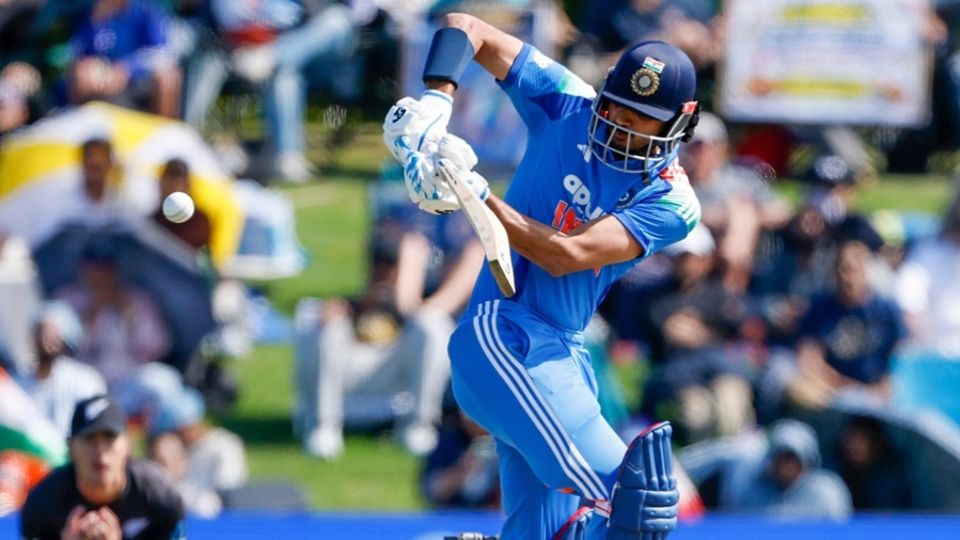
In short, Axar didn't convince as a No. 5 in these conditions, and while the pitches at the World Cup in Southern Africa may not have the seam movement of these New Zealand surfaces, some of them are likely to be just as bouncy.
Axar, however, bowled beautifully on pitches where he wasn't expected to be much of a force, hitting an impeccable length as expected, but also using the strong winds to accentuate his drift. He tested the left-handers' outside edge consistently, and had Nick Kelly stumped with a beauty in the fourth ODI - his figures of 10-0-39-2 in that game were remarkable given New Zealand scored 333.
In all, Axar remains a valuable package given there aren't that many players in India who possess his combination of all-round ability and experience. India could field a plausible XI that doesn't include him if Hardik Pandya is fit, but given how rarely that's happened of late, it's hard to see how Axar doesn't remain a key player going into the World Cup.
Recommended Read



Dhir throws hat in the ring
Naman Dhir gives India a lot of things that Axar doesn't. He can hit spin like Axar, and he seems to have a more rounded attacking game against pace. He pulls well, and was one of three India batters in the series with a 100-plus strike rate against the shorter lengths from fast bowlers - Kohli and KL Rahul were the other two.
But he's only eight matches into his ODI career, and T20s have made up the bulk of the cricket he's played over recent seasons. And this showed in two of his dismissals - an attempt to hit a pulled six in Wellington when rain was imminent and India were ahead on DLS, and an inside-out loft off Mitchell Santner in the series finale when he and Ishan Kishan, the last recognised pair, were at the crease with nearly 17 overs remaining.
And while Dhir's offspin has looked surprisingly robust in his international outings so far, it's still very early days in his career. In all, as an all-round package, he seems like the right player emerging at the wrong time; had this been November 2025 rather than November 2026, we might have been talking about him as a serious candidate to play in the World Cup.
Brar, Arshdeep lead impressive pace pack
India's last ODI series, against West Indies at home, was played on some of the world's most unforgiving pitches for fast bowling. The conditions in this series were the polar opposite.
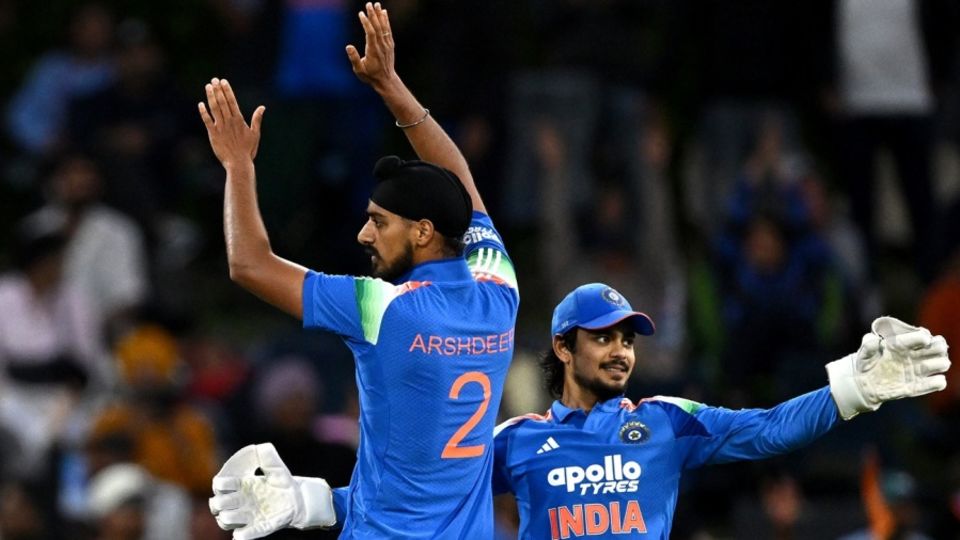
It's difficult to judge bowling displays on pitches at either end of the spectrum, but India will have noted the way their quicks used their attributes in both series. Gurnoor Brar, the highest wicket-taker and Player of the ODI Series, was quick and aggressive and a constant menace through the middle overs, testing batters with hard lengths and causing acute discomfort with his bouncer. Brar is exactly the kind of bowler India have identified as a must for South African conditions: tall, fast, bouncy, and capable of extracting something out of pitches when the white ball is old and unhelpful. Prasidh Krishna probably remains at the head of the hit-the-deck queue at the moment, but India may have room for more than one such bowler in their World Cup squad.
Arshdeep Singh, meanwhile, seems to have moved ahead of Mohammed Siraj - who only played one of the ODIs - as the preferred new-ball option alongside Jasprit Bumrah. And as the series went by, you could see why. Siraj remains an excellent option, but Arshdeep is a left-armer who swings the new ball both ways, and he has shown he has tools for the other phases of the game as well, causing problems with a deceptive short ball and adding a potent wobble-seam ball to his repertoire.
Kishan shows his value
India made it clear that they value the utility Kishan brings by making him vice-captain of the squad for the last two ODIs of the series, when regular captain Shubman Gill left the team along with Rahul to begin preparations for the Test series. With only 15 players permitted in a World Cup squad, Kishan becomes invaluable as a three-in-one player: reserve keeper, reserve opener and reserve middle-order batter.
While he has an excellent ODI record, some of this utility was still theoretical until Kishan got some game time. And the two matches he played in Mount Maunganui gave him a chance to show a side of his game he seldom gets to display in T20 cricket. He came in at 0 for 3 in the fourth ODI and top-scored with 27 even as India folded for 89, and his footwork while defending the fast bowlers was as decisive as it could be against a top attack in tricky conditions until he was bowled by a beautiful nip-backer from Henry.
He was similarly judicious while scoring 46 in the fifth ODI - he was the joint top-scorer - and fell while looking for big shots in the company of the tail.
It's not easy for a batter to make much of an impact while getting only two games in a bowler-dominated series, but Kishan did about as much as he could to show why India rate his 50-overs game so highly.