
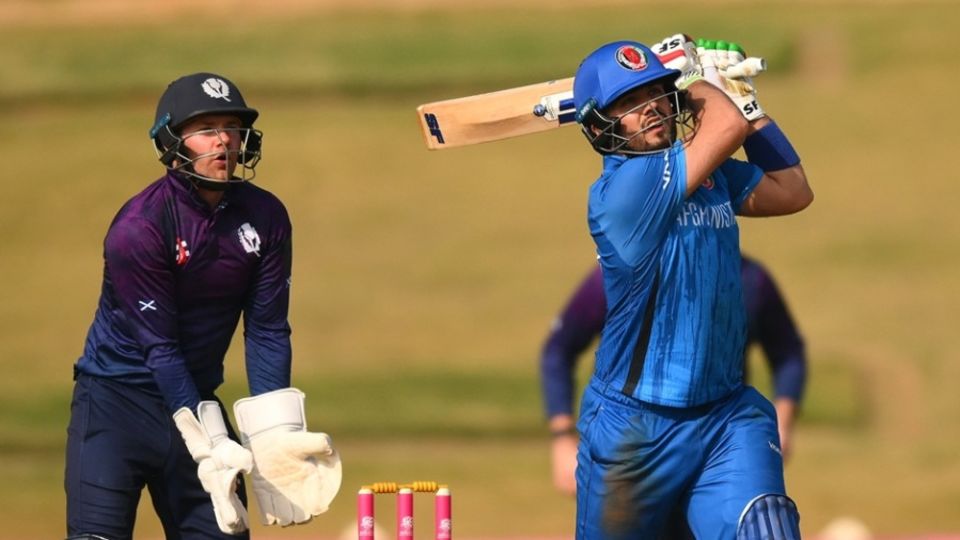
Cricket Scotland has announced that it will not schedule any fixtures against Afghanistan outside of ICC events due to the Taliban government's treatment of women and girls.
Scotland have not played Afghanistan in a full international match since the 2021 T20 World Cup, but have faced them in warm-up matches before the last two T20 World Cups (2024 and 2026).
Cricket Scotland's board launched a review of its engagement with the Afghanistan Cricket Board (ACB) this summer, after a request to use training facilities in Scotland before Afghanistan's tour of Ireland. The request was turned down due to its last-minute nature and the unavailability of any suitable venues.
Recommended Read


Cricket Scotland said the review was also prompted by an ACB approach over the potential availability of Scottish players for the planned Afghanistan Premier League T20 (APL), .
George Munsey, the opening batter who is a regular on the franchise circuit, was the only Scottish player signed in last week's APL draft. Cricket Scotland confirmed that, pending the league being granted an ICC sanction, they will issue him a No-Objection Certificate (NOC).
Cricinfo has learned that Scotland's contracted players - men's and women's - were all informed of the board's new policy on Monday.
"Cricket Scotland will comply with its obligations as set out in its contracts with its players," a statement said. "If an NOC is issued, participation by the player/s must not be interpreted as an endorsement by Cricket Scotland of the current Afghan regime or its policies."
The board said on Monday that Scotland would only play Afghanistan when required by the ICC at its events, including warm-up matches, and that it would not "proactively schedule" any cricket against Afghanistan "unless there is a material change in the circumstances surrounding Afghanistan women's cricket and wider human rights considerations".
Cricket Scotland's stance echoes those already applied by Cricket Australia and the ECB in relation to Afghanistan.
Afghanistan were granted Full Member status by the ICC in 2017 despite failing to meet the requirement to fund a women's national team and development structures. The situation for women and girls in the country has worsened significantly since the Taliban government regained power in 2021, and has been described as "gender apartheid" by experts.
An Afghanistan Refugee Women's XI, primarily based in Australia, toured England this summer to coincide with the women's T20 World Cup. The ICC put a roadmap in place for the team to potentially compete in its events by 2030 earlier this year.