


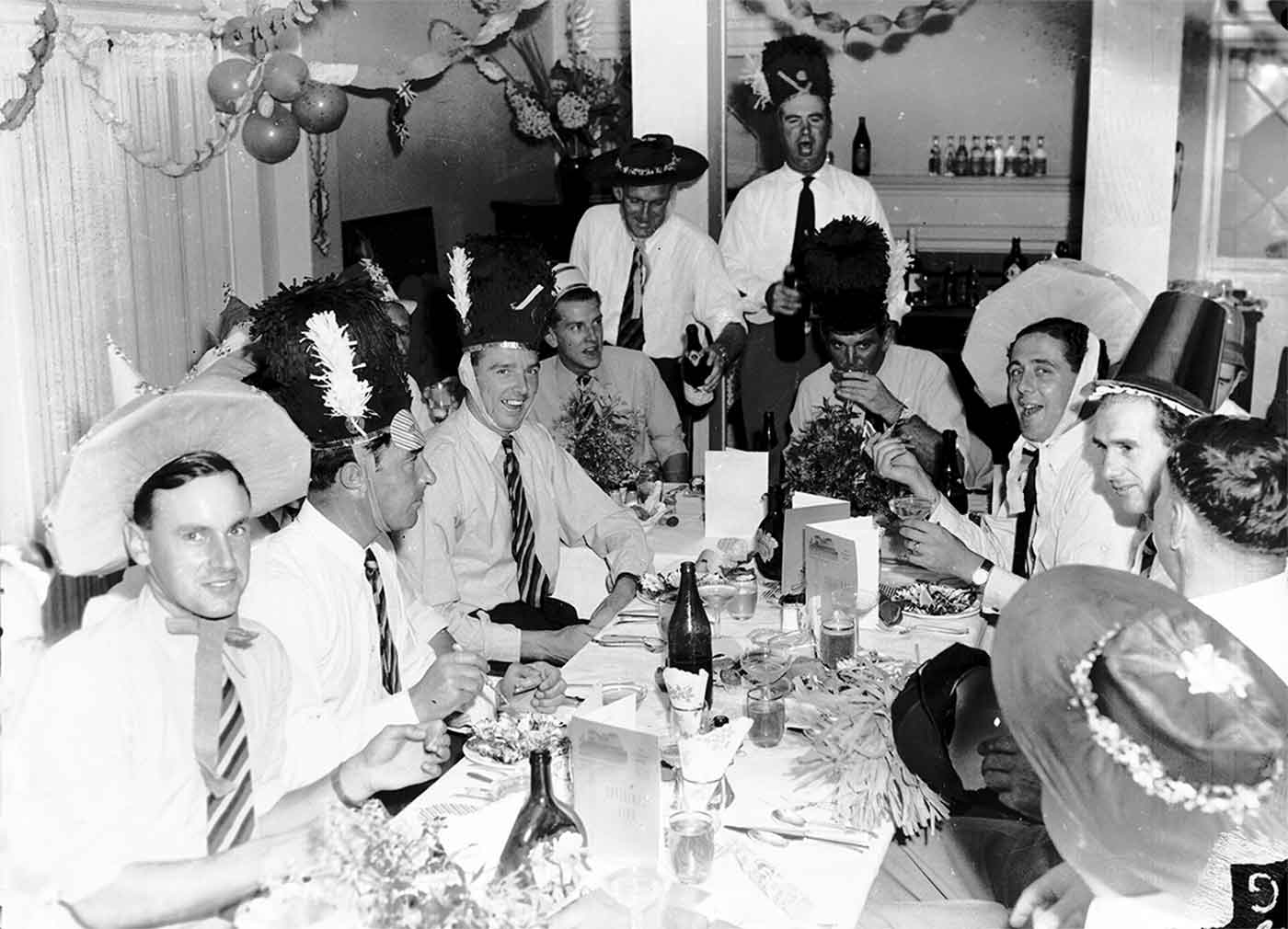
It was a merry Christmas for England, fresh from a close victory in the second Test, in Sydney, after having lost the first by an innings. Things had looked grim when England conceded a 74-run lead, but vice-captain Peter May's maiden Ashes ton turned the series around. Frank Tyson and Brian Statham shared nine wickets in the second innings and England won by 38 runs. They went on to win the series 3-1, the first time they won the Ashes in Australia since the Bodyline tour.
Injuries prevented Denis Compton from amassing runs, but he was entertaining in other ways: twice at the MCG he leapt the turnstiles, having forgotten his ticket. Keeper Wally Grout became a lifelong friend when Compton gifted him the bat with which he scored a century against Queensland. "Boy, that bat sounds sweet," Grout had said after watching him cover-drive. At stumps, Compton gave him the bat, with the words, "Hope this bat is as sweet to you as it has been to me" written on it.
The finest spell of Bob Appleyard's career came in the fourth Test, in Adelaide. On day four, with Australia only 18 behind, Hutton threw the ball to Appleyard after Tyson and Statham couldn't take early wickets. Appleyard bowled his pacy spin with control and clever variations and took 3 for 13 in a ten-over spell, sending Australia to 69 for 3 at stumps. The two fast bowlers returned the next day to finish up the innings for 111, and England won by five wickets.
Spinner Johnny Wardle took 8 for 130 in the final Test, in Sydney. It was surprising that captain Len Hutton didn't use Wardle more in the series, especially since he was befuddled by Wardle's deliveries himself (in the nets, back in 1946-47). "He bowled orthodox left-arm spinners to me for quite some time and without a word of warning produced a chinaman to be followed a few balls later by a googly, bowled pitched on perfect length," Hutton said. "'That surprised you,' Johnny called."
In the Test after Christmas, in Melbourne, Trevor Bailey batted for nearly two hours for 30 and close to three for an unbeaten 24 as England won by 128 runs. But in the final Test, he allowed himself to be bowled by Ray Lindwall so that the fast bowler could reach 100 Ashes wickets. Bailey had thought Lindwall's career was at its end, so he might have been surprised four years later, also in Melbourne, to be bowled for a pair by Lindwall, which brought an end to Bailey's own career.
© Getty Images