
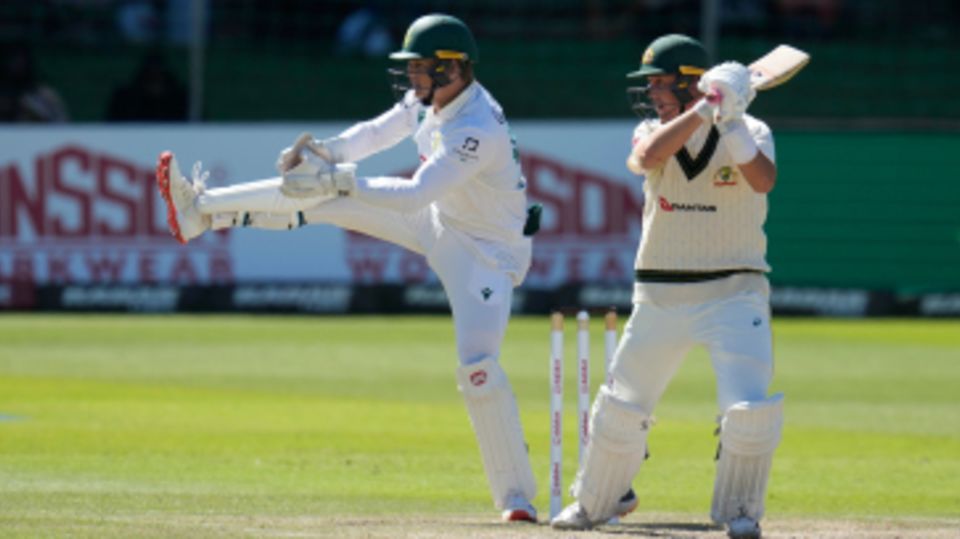



What was once considered something of an insult - a wicketkeeper standing up to the stumps to a seam bowler - has now become a serious and smart part of the modern game and this series.
South Africa's newly designated wicketkeeper Ryan Rickelton took that position when Wiaan Mulder bowled in Gqeberha, and it worked a treat. Mulder finished the match with five wickets against Australia, including the big ones of Steven Smith, Travis Head and Pat Cummins. He is expected to play the same role in Cape Town, which has also never hosted Test cricket as early as October and could present unusual conditions.
The Test pitch is being talked of as quite dry, but the last time Cape Town hosted a spring Test, in November 2011, this happened. Cape Town has never had the pace and bounce of the Highveld, but a fair grass covering on the pitch and occasional late winter rain in the area could still favour seamers, especially the ones in Mulder's mould. His ability to move the ball subtly and late has been his bowling's hallmark, and when he does it with the batter suffocated with a close-in keeper, it leaves the batter in two minds about whether to go forward or back.
Recommended Read



"[Bowling with the keeper up] just changes the batter's mindset," Rickleton said in Cape Town. "I came up to Travis, who had both feet in the crease [while batting] anyway. I don't know if the bowler feels like he has to go a little bit straighter, or a little bit fuller, or the batter feels like he has to play it a lot more. I'm actually not too sure what the dynamic is that I see [that makes standing up to the stumps effective], but it's a trend now in world cricket."
In the same match, Alex Carey stood up to Scott Boland, but there are also examples from elsewhere. Both Mohammed Abbas and Ollie Robinson had their keepers standing up to them in the most recent English summer. In Gqeberha, South Africa's slowest and lowest wicket, South Africa's plan was to use Mulder's medium-pace and discipline to frustrate Australia, especially during the dead periods. St George's Park is known to be a place where the game can drag and then speed up at pace towards the end, which is almost exactly how it played out in the second Test of the series. A total of 19 wickets fell on the last two days, including 13 on day four and four in the last session on day five after Mulder broke the match open.
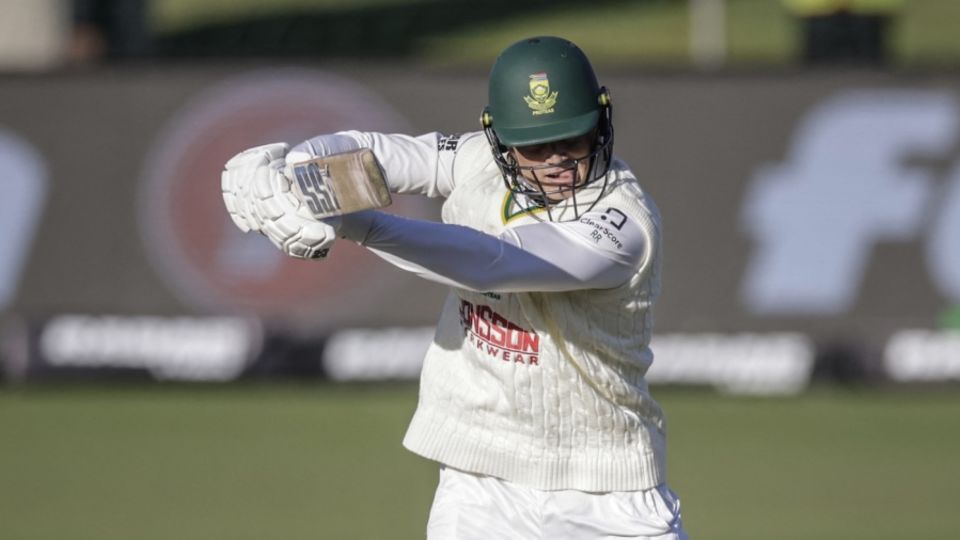
In the final session, Mulder bowled Boland and Cummins in successive overs, beating Boland's inside edge and Cummins' outside edge, and proving the value of bowling stump-to-stump as well as moving the ball late.
"On that wicket, with Wiaan's pace and the divots, not a lot was happening at periods of time. If we could just try and change it and make the batter think something different was going to happen," Rickelton said. "Wiaan maybe pushed it through a little bit fuller, and that reacted off the divots in the wicket and gave us the opportunity to hit the stumps a lot more instead of trying to nick them off."
Mulder, whose pace is mostly in the mid-130s, also nips the ball both ways and has started to carve out his own niche. "He's bowling a lot quicker," Rickleton, who also plays domestic cricket with Mulder at the Lions, said. "The responsibility he's been given, leading the attack with Marco opening the bowling in Durban, made him try a bit harder to come to the party.
"Now, I think he's feeling a lot more confident with it as well. He doesn't just see himself as a fourth seamer there to kill some overs. He's actually there to bowl good plans, good spells, and take wickets. He's really coming of age, especially with the ball. I can see the way that he's running in, the intensity [with] which he bowls each spell. He's been phenomenal for us these first two games. And he'll have a massive role to play this week. Together we have that relationship, that communication of whether I come up or go down."
For Rickelton, who has not stood up to a seamer "in quite a long time," it presents a unique test, especially as he had never kept wicket in a Test match before last week. In the build-up to that match, he was first at the training and last to leave. He spent long periods of time practising being up at the stumps to quick throw-downs. "It's a unique one when it comes to training as well. We've got Kruger (van Wyk) who goes quite hard with our spin work, but then we'll get guys who throw a good pace down the wicket, and we'll get a shadow batter as well," Rickelton said.
At Newlands, two days before the deciding Test, Rickelton was on the practice pitch, where van Wyk was doing throw-downs, and Corbin Bosch did his batting with a stump in hand. "It's a nice challenge for me," he said.
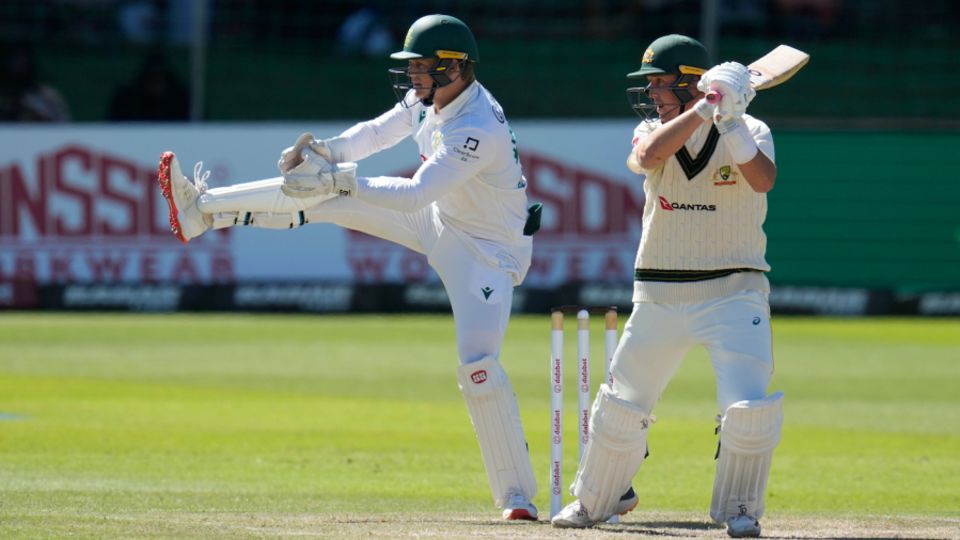
Rickelton conceded eight byes, including four off a bouncer bowled by Mulder "which he didn't communicate about", which left him "quite mad," and missed a tough chance off Mulder but took four regulation catches in Gqeberha. He called the experience, and in particular standing up to Mulder, overall, "really enjoyable". He said "it was quite hard with Steve Smith batting because of his technique, but a nice learning for me and a nice opportunity for me to get behind the sticks and actually show that I can do this in a Test match."
He will have the chance to do it again in Cape Town, with Kyle Verreynne all but certain to remain out of the side as his lack of runs cost him his place. But Rickelton himself is not entirely safe. He has only one fifty in his last 14 Test innings and knows his form is also under the spotlight. At Newlands, where he has only played three red-ball games, including a Test where he scored 259, he has never not scored a century, and averages 61.27. He is also batting in what he regards as a more favourable position in the middle order after opening for the seven Tests.
"Opening the batting in Test cricket sucks. It's hard. It's really hard," Rickelton said. "I've watched guys like Aiden, who's quite a free-flowing player, rein himself in quite a lot. He's still one of those guys that look to score, but his ability to hold himself back is what it comes down to. In South Africa, it's maybe a lot easier in the middle order as the ball gets older and the bowlers get a little bit tired. Obviously, you can be a little bit more expressive in the way that you want to go about it. I've batted one to six on this side and experienced all the roles. Opening definitely is the hardest. To be able to hold yourself back is sometimes a bit challenging for me."
That doesn't mean his task is much easier, though. "Against an attack like this, where you can't just let it go... sometimes the newer ball makes me tighten up and makes me a better player. I'm still looking to play my natural game, but still being tight within it. If the ball's not moving around as much, these guys are more than good enough to bowl six in the same spot. The adjustment is just still looking to be positive, but sticking to that game plan for a long period of time."
South Africa's hope is that the extra responsibility of keeping wicket impacts Rickelton's batting, rather than burdens him. and so far, that has been his experience. "The intensity was really good. It's nice to be more involved in the game because sometimes when I'm just batting, I can stand on the boundary for 90 overs and kind of drift away," he said. "I really enjoy being locked in every single ball. It adds to my batting as well. It's not that there's less focus on it, but a lot of intensity and a lot of focus on my glove work. And then my batting will sort itself out as we go."