


It was early Tuesday morning when Sahibzada Farhan stepped off a plane from Nepal, and headed straight to the Pakistan team hotel. He was only there as replacement for out-of-form opener Saim Ayub whom, the official version goes, had of his own accord been asked to be taken out of the team so he could focus on domestic cricket.
It was deemed Farhan had arrived too late to be reasonably expected to start the game, now just three hours from toss time. Pakistan gave Maaz Sadaqat his first game of the series, and persisted with Fakhar Zaman. They scored 8 and 5 respectively, Pakistan were bowled out for 110, and Sri Lanka won with almost 32 overs to spare.
By Saturday afternoon, Farhan was properly settled in, and Pakistan had a decision to make. Fakhar's failure on Tuesday was an extension of the torrid time he had endured all tri-series. He had scored 31 runs in four matches, struggling conspicuously against the short delivery and looking a step slow each dismissal. The T20I series just prior had yielded three brief, unconvincing cameos, whereas the main in waiting - Farhan - had watched Fakhar from the other end, and smashed 238 in three innings. Yes, that was a different form of the game, but there is barely a side in the world that loves format-mixing as much as Pakistan.
Recommended Read
Pakistan were forced to contemplate the unthinkable - dropping Fakhar in a big final. Fakhar has already earned Pakistani cricketing immortality for his century in the Champions Trophy final over India nine years ago. But if that innings secured his legacy, his contributions in the decade since have cemented his reputation as a big-match player. The following year, he overwhelmed Australia in a T20I tri-series final where, pursuing 184, Pakistan lost two wickets in the first over before Fakhar smashed 91 off 46 to lift the trophy. In a number of key World Cup games as well as matches for his PSL franchise Lahore Qalandars, Fakhar's contributions have frequently towered over his team-mates'. In a side frequently accused of crumbling under pressure, he was the mentality monster.
Perhaps for no other reason except no one was brave enough to axe him, when Shaheen Afridi brought the team sheet with him to the toss, it bore Fakhar's name on it.
****
Four hours later, Pakistan found themselves in precisely the sort of mess they were gambling on Fakhar to conjure them out of. Pakistan's top three has been the worst of any side all tri-series, and within 21 balls, two thirds of it was gone. Sri Lanka had set them 326 to win, a joint all-time record for an ODI final. The entire crowd in Lahore had been stunned into silence when Babar Azam nicked off for a duck, even if that isn't very stunning anymore. If Fakhar followed anytime, a large number might have turned heel and headed home to salvage what was left of their Saturday evening.
It nearly transpired that way. In the third over, Fakhar had cut Asitha Fernando up over deep third, though not quite as far over him as he would comfortably have liked. Dilshan Madushanka got both hands to it but only succeeded in tipping it over the rope.
Upon such moments can fortunes rest, and another Pakistan player similarly out of form would likely have been shaken enough to reduce the risk-taking until they had a score of substance on the board. Fakhar considers such selfishness beneath him, and it is precisely why he is in the team. He is better attuned to the cadences of an ODI chase than most and knew the asking rate could slip very quickly out of sight into the Lahore smog. Especially a big run chase; he averages over 60 in successful chases over 300, and a four of his 12 career ODI hundreds have come in such games - more than any Pakistan player.
Saad Baig, on his last day as a teenager, helped Fakhar out with a fearless start of his own, but the 36-year-old knew he would need help. Through the first powerplay, whenever the chase appeared to stall, Fakhar went up and over. He heaved Maheesh Theekshana for a cow corner six off his third delivery, and picked off Janith Liyanage in his first over behind square. Until Saturday night, Pakistan had managed just two sixes in the first 12 overs of an innings this tri-series. This time, Fakhar alone had three.
Fakhar would remember this period much more modestly. "I was struggling when [Saad] came in, and he scored very quickly," he said. "That relaxed me. If he'd played slowly, then maybe I'd have taken a chance, and I might have lost my wicket. Credit goes to him for how he started and how he built his innings."
It is perhaps another intangible that puts Fakhar in Pakistan's best ODI side. In a team that, at its unhappiest, can feel balkanised, Fakhar's gentle touch as an elderly statesman makes him one of the few universally loved figures in Pakistan cricket, both among its supporters and its players.Under his benevolent gaze, Saad played his shots to warm encouragement, carrying his share of the load instead of letting this turn into another one-man epic.
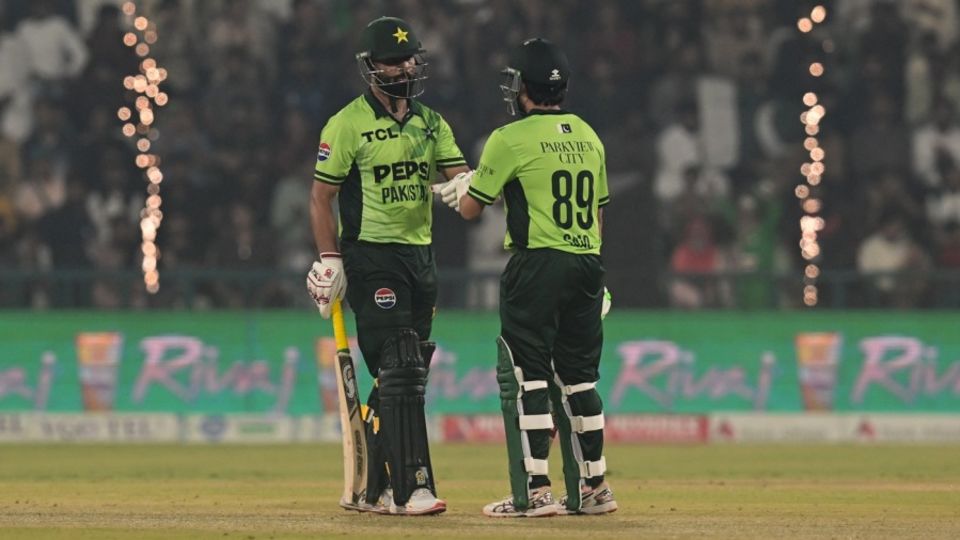
For Fakhar knew time at the crease for him directly correlated to Pakistan's chances of victory, demonstrated in his calculating onslaught when, after a 149-run stand, Saad departed for 74. Pakistan were still 163 runs from their target, exactly only halfway there when Fakhar picked his moment. Aware through keen observation that Salman Agha's opening-game century has been followed by a lean tournament, and through bitter experience how swiftly Pakistan's lower-middle order can crumble under any more than mild scrutiny, he found the asking rate - a shade over seven - still uncomfortably high.
The temptation, once more, was to consolidate. Fakhar had struck two boundaries in the previous over, and theoretically bought the breathing space to do so. But the first ball Fakhar faced after Saad's departure, he drilled Fernando into the sightscreen. It was the cleanest shot he would hit all night, and an unmistakable sign he was about to spring his attack. Agha, he had correctly sensed, started slowly, and now, it had become a one-man show.
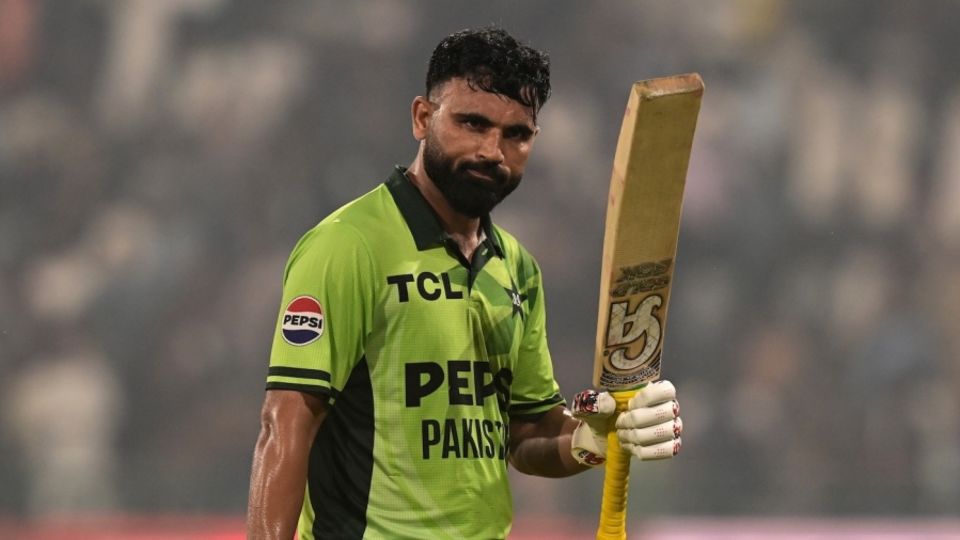
The milestones were meaningless; he got to his century with an extravagant pull over square leg, and barrelled onwards. Madushanka's return to the attack was greeted with another six that deep third obligingly helped over the rope, but that sort of luck, as Fakhar knows only too well, is just garnish for a sufficiently large innings. After all, Fakhar had famously begun haltingly in that Champions Trophy final and nicked off for 3 before Jasprit Bumrah, of all people, was found to have overstepped.
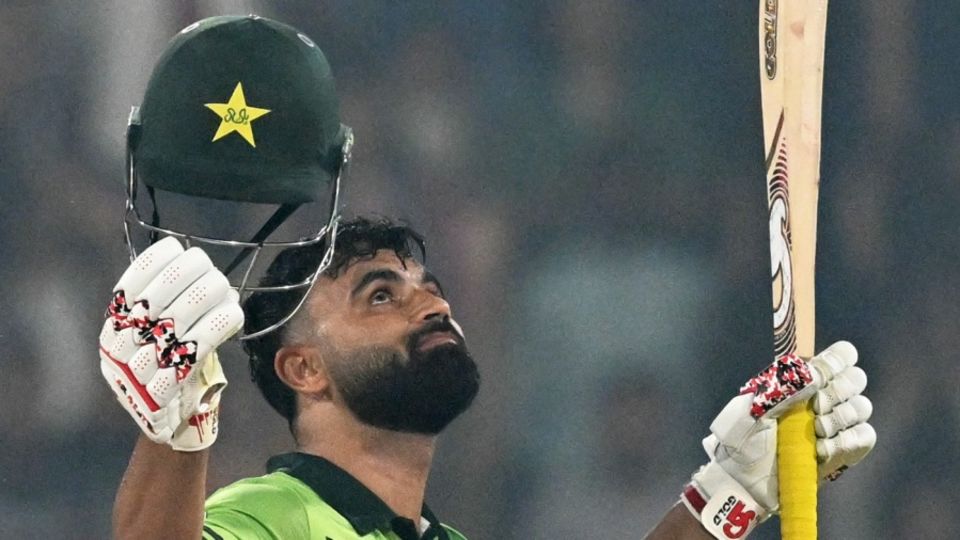
"I've played enough cricket to know when it's my day and the ball's coming on to my bat, I'll go big," Fakhar said. "I was waiting for that day. I didn't do anything special, just prepared the way I'd prepared for the previous games. When I score runs, people say I'm mentally ready, I'm fit. But I was preparing the same way, and luckily I scored runs. The way the first four games went, I was due a big performance. Some days you feel in good nick and you still don't score runs."
He went after Dunith Wellalage, who had until then been Sri Lanka's most miserly bowler, drawing down another 12 runs from Pakistan's target before the end finally came. Madushanka read Fakhar as he made room and charged early, nailing him with a perfect yorker. Between the 27th over, which brought about Saad's wicket, and Fakhar's own dismissal, in the 34th, Pakistan scored 62 runs - the most for any side in that passage of play all tournament. And this is a tournament, remember, that has seen three scores in excess of 380. Fakhar was solely responsible for 53 of those 62.
When he walked off, to a standing ovation from a grateful Gaddafi crowd, the asking rate had plummeted to just over six. Like a parent getting their affairs in order to facilitate time after them, he had ensured those who followed would have as easy a task as his waning powers could possibly give them.
"It's good for me that I get runs in finals," he said. "You perform to win trophies. When you get runs in finals, it's more satisfying."
Pakistan will hope there are still a few finals left in the man. Life after Fakhar, on current evidence, doesn't seem much fun.