



India 116 for 6 (Rahul 25, Duffy 2-21) trail New Zealand 356 (Blundell 89, Akash Deep 5-99) by 240 runs
New Zealand assumed firm control of the Christchurch Test on day two, adding 110 to their overnight score of 246 for 5 and taking five top-order wickets even before India could knock those lower-order runs off. From the moment Matt Henry hit Yashasvi Jaiswal's off stump with a beauty in the first over, India batted with the kind of heightened intent that usually suggests conditions where scoring runs normally is not possible, thus offering New Zealand wickets to what will appear as irresponsible or casual shots.
While it didn't always look to be the case given New Zealand batted 116.3 overs and given how India could keep good balls out when they defended, scoring runs was indeed difficult. When Washington Sundar and Dhruv Jurel decided to dig in and bat "normally" from 104 for 5, they could add only 12 in 15.1 overs. Even they had an edge each fall short of slip before Washington fell to what proved to be the last ball of the day.
With four fast bowlers fit and eager to wheel away for long spells, there was no relief available for the India batters. The wickets were shared between Henry, Kyle Jamieson, Jacob Duffy and Nathan Smith. Their accuracy and intensity made sure India had to take risks if they wanted to transfer the pressure back. No one went looking for the magic ball, which wasn't always the case with India.
What made the pitch difficult was the steep bounce and generous seam movement, which was available to India's bowlers too, arguably in larger quantities. It was apparent when Anshul Kamboj got the overnight Glenn Phillips for no addition to his overnight score with an unplayable ball. However, the New Zealand batters kept getting the occasional half-volley, even from Jasprit Bumrah, who has now gone 45.2 overs without a wicket, his second-longest drought in Test cricket.
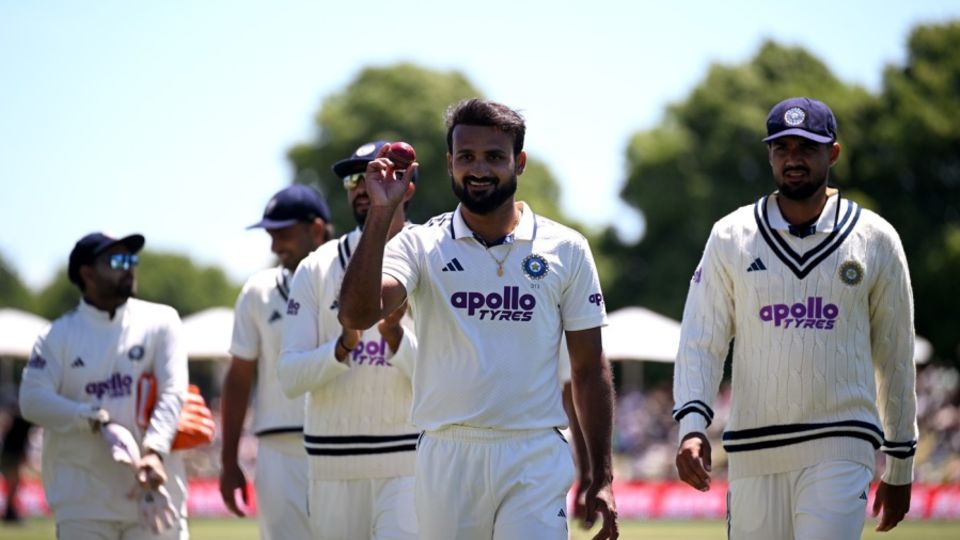
Even then, Bumrah went at under two an over, often going past the bat and bowling too full and straight possibly out of frustration. Tom Blundell anchored the lower order, which was allowed to play with a little more freedom. Wickets seven, eight and nine added 44, 33 and 42, but Blundell got only 36 of those. Three drops for Henry only helped the total swell and delayed a well-earned five-for for Akash Deep.
There were no such let-ups from New Zealand. Henry took five balls to make Jaiswal play, but when he did, he made it unplayable by seaming the ball against the angle from round the wicket and hitting the top of off.
Devdutt Padikkal, who usually prefers to stay back and play square of the wicket, came out walking at the bowlers in order to cut down the movement. He took an off-stump guard, and regularly played from outside the crease, scoring a 20-ball 21. Jamieson might have taken a couple of covers to get into his work, but when he did he was a nightmare with both seam and extra bounce. Because of his initial movement, Padikkal must have thought he had got himself a drive ball, but Jamieson's bounce and just enough nip away took the edge.
Shubman Gill put on an off-driving exhibition for a while before Jamieson bowled perhaps the ball of the innings. Angled in at the top of off, it made Gill play defensively and straightened just enough to take the edge low to second slip.
Gill's wicket brought about tea. Post tea came Rishabh Pant, charging at Jamieson first ball into his innings, first ball into a new session. Then he started defending, and defending immaculately, looking perhaps more solid than his partner, the ever-solid KL Rahul. However, to score runs, even Rahul had to throw his bat the moment he saw a full and wide ball. Pant tried to unsettle Duffy, who had gone for 1 for 201 in the last Test, with a charge at him first ball and a dismissive six over long-on.
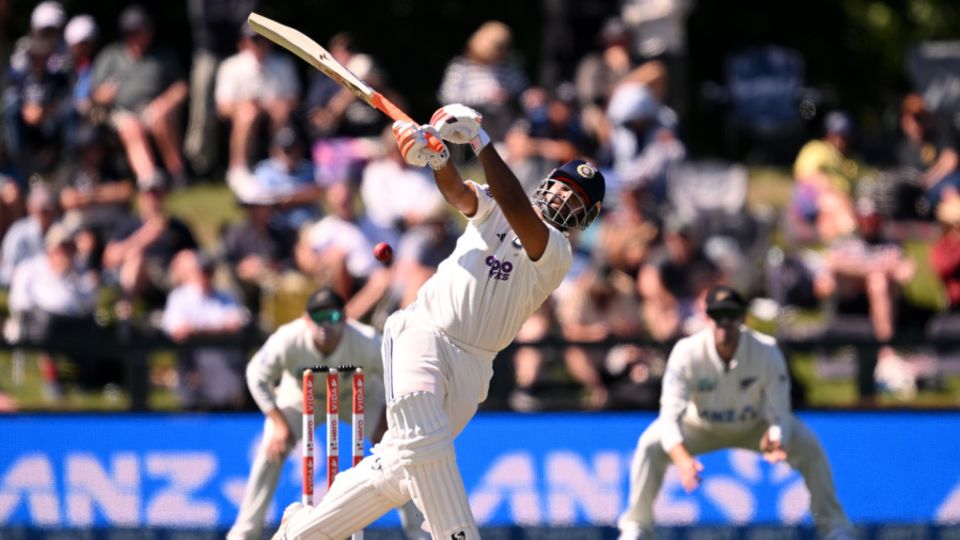
However, if the bowlers stuck to their lines and lengths like Duffy and Jamieson did, runs only trickled by in singles or through risks. When Jamieson was allowed to bowl the good length angling across Pant, he began to beat the bat as well.
The difference in the two team innings was the relentlessness of the bowlers. Henry's first spell was seven overs long. Jamieson bowled ten out of the first 24 overs. Duffy went on for eight overs unchanged. They never went searching, trusting there to be no release from anywhere. They stuck to good lengths or even short of a good length.
The shots that Pant and Rahul played to get out will be debated endlessly, but they need to also be seen in this context. Pant charged a fast bowler for the fourth time, having played and missed twice, hit one for a six, and now skying a difficult swirling catch for Jamieson at backward point. Rahul saw some rare width and threw his bat again, this time finding backward point with precision.
When Jurel and Washington decided to play to the merit of the ball, Jurel perhaps looked the most uncertain he has ever done in Test cricket, playing 12 false shots in 45 balls. Washington eventually did edge away low to second slip, just reward for 12 overs of hostility from Smith, leaving India 240 adrift with four wickets in hand.