
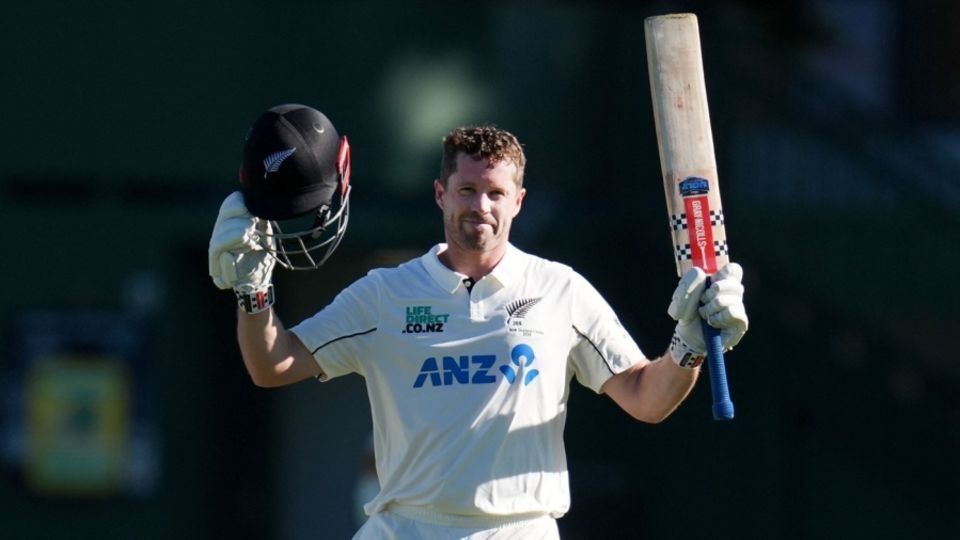


Henry Nicholls' 12th Test hundred - now level with John Wright and Brendon McCullum - and Glenn Phillips' unbeaten 94 helped New Zealand recover from 70 for 5 on a typical first day's Test cricket in Wellington.
A side was put in on a green pitch, early wickets fell, but the grass looked more threatening than it really was, and India were soon looking for a point-of-difference bowler who could bowl bouncers like Neil Wagner as Nicholls and Phillips ran India ragged with an unbeaten 173-run stand to give them ascendancy on the opening day.
Averaging just 13.55 with a top score of 44 in six Tests against India, Nicholls might have seemed a questionable selection on the outside, but New Zealand trusted their No. 3 replacement for Kane Williamson in conditions suitable for fast bowlers. In a nice little nod to the ship-steadier, Nicholls joined Williamson as the most prolific centurion at the Basin Reserve, having nearly scored a third of his career runs at the iconic venue to go with five hundreds.
Recommended Read

The pitch might have settled down, the ball might have got softer, but Nicholls was there right from the first over when Tom Latham became the latest victim of Jasprit Bumrah's sorcery that makes you look silly leaving a ball. He saw Bumrah take two more, and two others fall at the other end. Nicholls still looked like batting on a different surface. He played only two false shots to the first 30 balls he faced, displaying none of the indecision or premeditation that contributed to the early wickets.
While Nicholls earned the right to score runs by seeing off this nasty period of seam movement, he needed a partner who could play the innings for the conditions and not for the scoreline. This is where Phillips came in, square-driving on the up with the ease generally reserved for the flattest and truest of tracks. Before India resorted to restrictive bowling, Phillips raced away to 56 off 75.
That Phillips could add only 34 in a further 108 balls will give India a bit of satisfaction in that they didn't let New Zealand run away with the game, conceding at 2.96 per over for the day, but they will have wanted more jeopardy from their bowlers with the older ball after the impressive start when the ball seamed around a lot in the first session.
Bumrah had Latham completely deceived when he left alone the third ball of the match, even though the seam was held for in-swing for left-hand batters. He also perhaps misjudged the length, as batters tend to, because of the lift Bumrah gets. Also, the ball didn't swing as much as it seamed off the surface to hit the top of off.
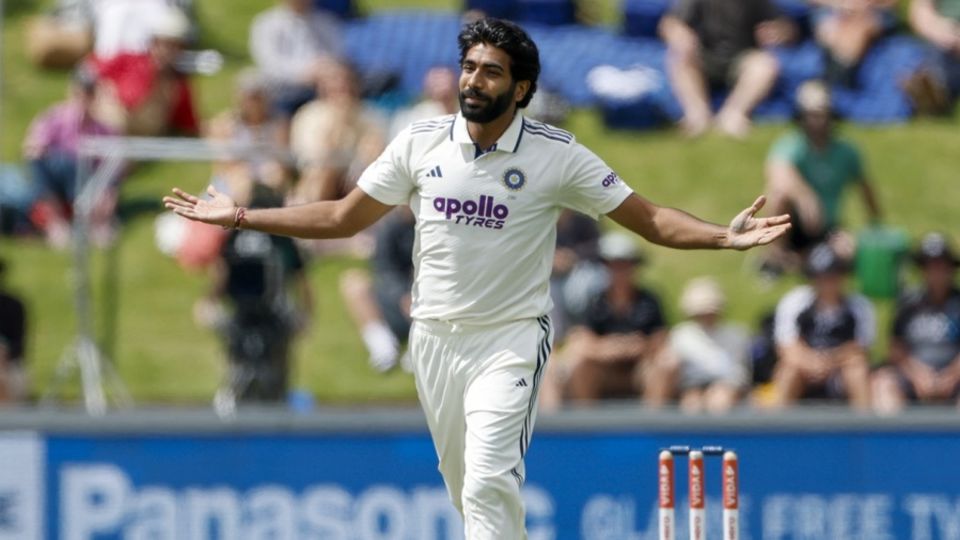
India's No. 2 fast bowler and the leader of the attack, Mohammed Siraj was benched even when India gave up the notional comfort of an allrounder for a fourth specialist fast bowler. With the new ball, Anshul Kamboj and Akash Deep posed enough questions, drawing unwise shots from Devon Conway and Rachin Ravindra. Conway looked for an expansive drive off Kamboj without getting close to the pitch of the ball, and Ravindra misjudged the length from Akash to play something between a cut and a drive.
That Ravindra wicket left the door open for India after a 39-run stand for the third wicket, which already had Rishabh Pant standing up to the wicket for Nicholls. Shubman Gill now got Bumrah back, and the two executed a superbly planned dismissal of Daryl Mitchell, who likes to walk at fast bowlers to cut the movement and also avoid the lbw. Such batting also leaves you prone to playing outside the line of the ball, resulting in inside edges. And India had a short leg in place for him to dismiss him in that exact manner for 1.
Tom Blundell got worked over by Bumrah in that seven-over spell either side of lunch. Of the 22 balls that Blundell faced, 20 came from Bumrah's wide release. The angle and seam movement each way troubled him plenty before Bumrah took the edge with one that moved away.
This was Bumrah's fourth over after lunch already. Even though five down, New Zealand could see some light at the end of the tunnel if they could see Bumrah off. Phillips did more than that, cover-driving the fourth ball he faced with disdain.
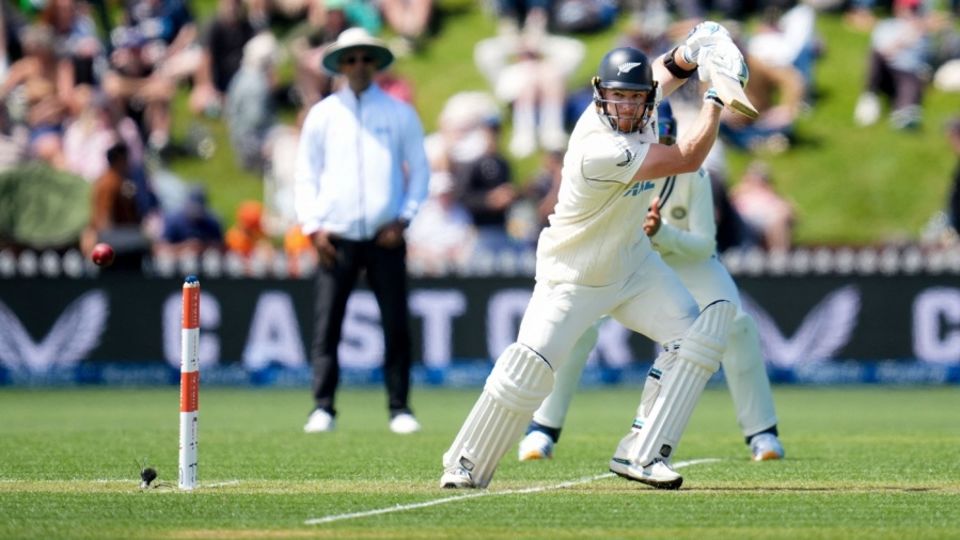
Nicholls had so far shown excellent judgement, playing late, driving only when he had the line covered, and using the tuck off the hip to score a majority of his runs. Phillips now showed they could look to score more freely.
After one four-over spell with the wind, Prasidh Krishna was asked to do the thankless job of going into the wind and bowling into the surface, much like he did in England. That being said, Prasidh did proceed to err whenever he tried to bowl the fuller change-up delivery, floating up half-volleys, which Phillips dispatched with glee.
Kamboj and Akash, who got to continue bowling with the wind, the end where four of the wickets fell from, failed to trouble the set batters. Without sideways movement, their pace, which also tended to drop after their first spells, didn't ask many questions.
The batting remained disciplined: the first lofted shot of the day came in the 66th over when Nicholls skipped down to Washington Sundar, selected ahead of Ravindra Jadeja, and chipped him over midwicket to take the score past 200.
Prasidh's persistence with the short ball seemed to have paid off when he drew a top edge from Nicholls in the 74th over, but miscommunication between Devdutt Padikkal and Pant resulted in the catch being dropped. India did succeed in restricting the run flow, conceding just 22 in the ten overs leading to the new ball, but it also seemed that the pitch was neither treacherous enough to justify 70 for 5 nor docile enough for there to be no wicket for four-and-a-quarter hours.