
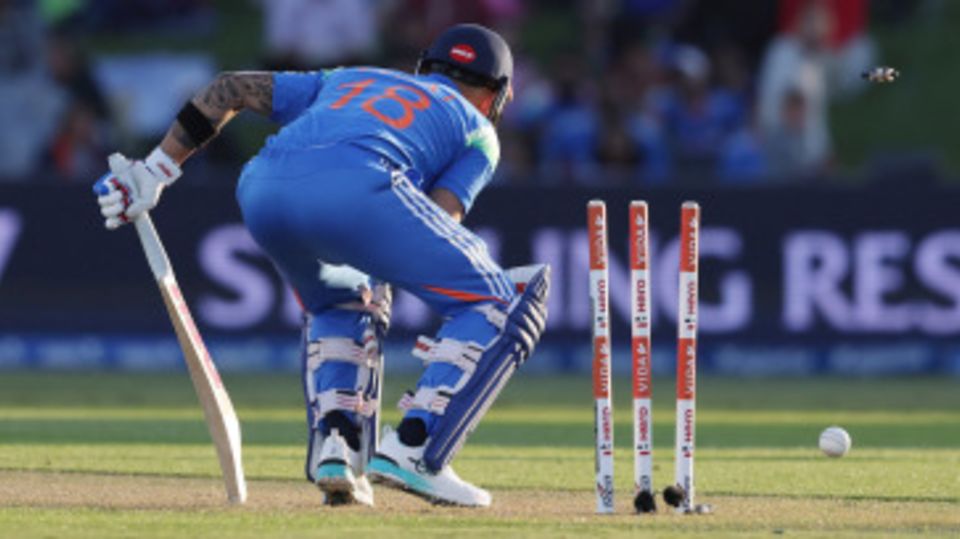



India head coach Gautam Gambhir is concerned about his batters - not just for being bowled out for 89 on their way to a 244-run defeat in the fourth ODI against New Zealand in Mount Maunganui, but also for slipping to 111 for 7 in their chase of 135 in the second ODI, a rain-affected game they narrowly won via DLS method.
India are 2-1 up in the series with one match to go, also in Mount Maunganui on Sunday.
"There's no benefit to sweeping it under the carpet," Gambhir said in his post-match press conference on Friday night. "It isn't just this match. Even in the previous match, we were seven down for 111 or 112. Today we lost, so we are talking about it.
"Yeah, it's a huge defeat, no doubt about it, but even in the previous match, if you're chasing 135, and you get seven down for 111, obviously it is a bit of a concern, because yes, there is some help here for the bowlers, so we have to be not only mentally but from the skill point of view we need to be ready as well.
Recommended Read


"You aren't going to score 70-80 in the first 10 overs [in ODIs in these conditions]. If you're 35-40 for no loss, that is also good enough. In India, the easiest time for batting is the first 10-15 overs. Here it's probably the hardest time. This is the difference in these conditions, and with the amount of experience we have, hopefully we can adapt in the last game."
India's batting displays have especially worried Gambhir since they have come in conditions that he felt were broadly similar to the ones that might be on offer during next year's World Cup in Southern Africa.
"You are always concerned when you get bundled out for 90-odd, why won't I be concerned?" Gambhir said. "I think I will be concerned because obviously these are conditions which are going to be closest to what we might get during the World Cup.
"When you play in India, obviously you all know that there is hardly anything for the bowlers, but when you come in these conditions, you know that there is actually a good contest between bat and ball, so this is probably the closest [conditions to the World Cup], so obviously I would be concerned because not only in this game, but even in the previous game, we were 7 down for 111-112, so for me I think the bigger concern [from Friday's game] is not the runs, it's how quickly we got bundled out - I think in around 26 or 27 overs [26.4 overs], so hopefully we can try and rectify that as soon as possible."
Playing his first match of the series, Matt Henry was New Zealand's match-winner with the ball on Friday, picking up 6 for 27 including three wickets in a sensational first over in which New Zealand, defending 333, saw the backs of Rohit Sharma, Virat Kohli and Shreyas Iyer for no score.
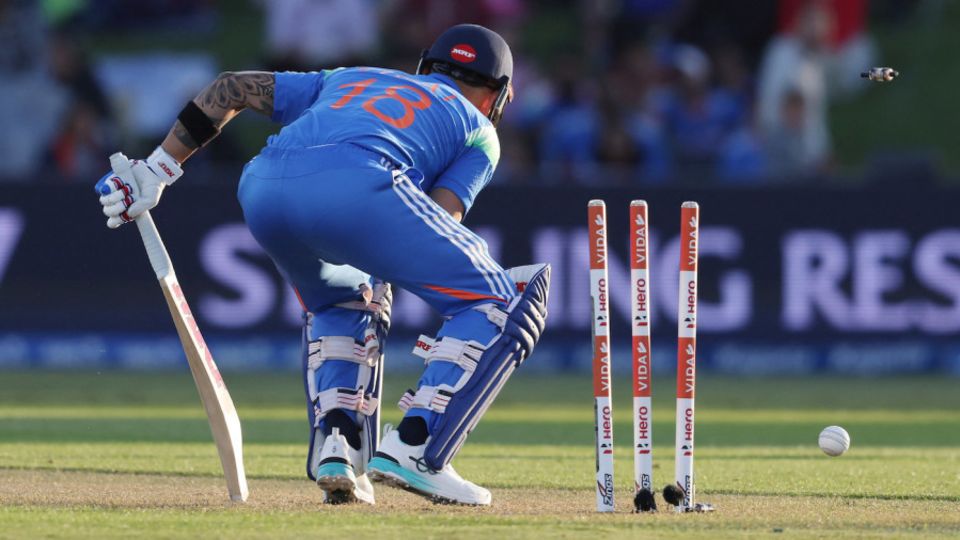
The wobble-seam ball was a key weapon for Henry, but Gambhir felt that the bigger challenge he posed was the lengths he kept hitting. He felt the batters could have been more proactive with their footwork in dealing with these lengths.
"Honestly, I don't go into this much technicality, wobble seam and all that," Gambhir said. "Ultimately, whether it is wobble seam or an upright seam, there was not much deviation. There was not much seam movement if you look at it. We create all these things - wobble seam, scrambled seam, cross seam. Ultimately, it is the job of the batsman to negate the movement. Whether it is the upright seam, wobble seam or scrambled seam.
"I thought more than the wobble seam, it's the areas that has probably created a problem for us. It's that length, because it was that length where you couldn't go forward, you couldn't go back. It was that half-half length.
"We had to be probably more committed towards it rather than getting stuck on the crease. For me, more than the wobble seam, it is where we got stuck in the crease was the problem."
India's less-experienced seamers weren't quite as relentless with their lengths, but Gambhir said this was partly down to their bowling styles - singling out Gurnoor Brar for being a hit-the-deck bowler who usually hits shorter lengths - and partly a factor of luck too, with Auqib Nabi having found Will Young's edge twice in the early overs of New Zealand's innings only for Rohit Sharma and Ishan Kishan to put down back-to-back chances. Young went on to score 125.
"Obviously we have one guy who has that [shorter] natural length, Gurnoor," Gambhir said. "He hits the deck hard, and that is what his job is, to come in the middle overs and try and use that short ball, and that is exactly what he was successful with in the first two games.
"I thought Arsh [Arshdeep Singh] and Auqib bowled really well. Auqib was a bit unlucky because had we got Will Young in that first couple of overs, probably things could have been a lot different. Once you are in, you want to try and make the most of it, and that is what Will Young did. He got those two chances and he made the most of it, and someone who gets 120 when you are batting first, obviously you have capitalised on the opportunities.
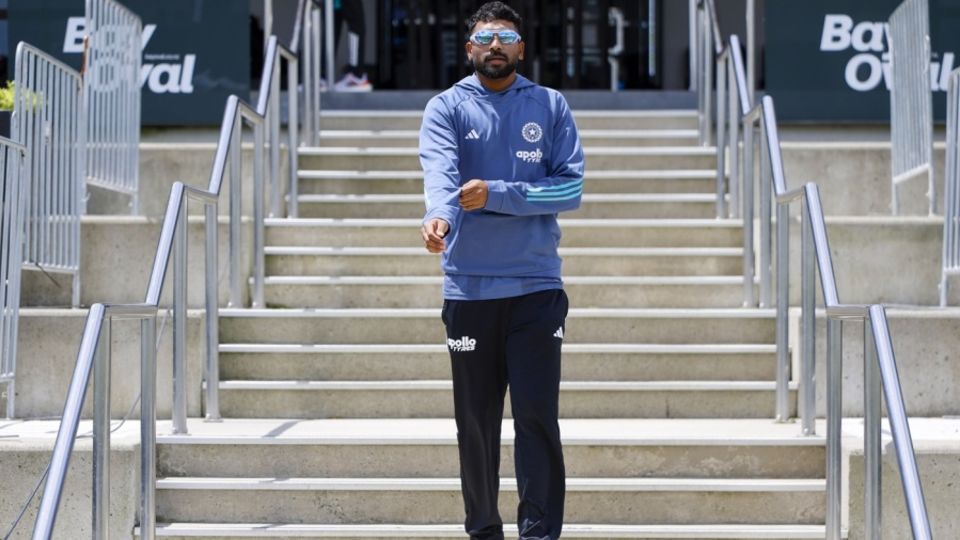
"Things could have been a lot different, but there is always hindsight to what you do because we dropped catches, no one else did, so we had to pay for it."
With Anshul Kamboj leaving the ODI squad to join the pre-Test-series camp in Wellington, India changed their bowling combination, but rather than a straight seamer-for-seamer swap, they picked a wristspinner in Kamboj's place, Kuldeep Yadav. This meant Mohammed Siraj - who is yet to play in this ODI series, and who hasn't left for the Test camp despite being part of the red-ball squad - stayed on the bench once again.
"We thought that a wristspinner would be more useful, as simple as it can get," Gambhir said of the selection. "Yes, obviously, he has played a four-day game as well [for India A against New Zealand A in Christchurch], so he [Siraj] had enough bowling under his belt as well.
"So we thought that obviously in these conditions, especially a bigger ground, that if we can have a wristspinner in the middle overs to try and take wickets, we thought that that was an attacking option and we went ahead with that. So, whatever we felt was the right combination, we went ahead with that."
Playing his first game of the series, and his first competitive game in more than a month, Kuldeep looked well short of his best form and went for 73 in eight wicketless overs. Gambhir didn't agree with the idea that lack of regular game time has hurt Kuldeep's rhythm.
"Look, game time will always be limited [as a spinner] when you travel overseas," Gambhir said. "But whatever opportunities you get, you try and make the most of it. It's not that he hasn't got enough game time. He played three ODIs against West Indies [at home in October]. And then when you are travelling a place like New Zealand, and when you know the dimensions [of the grounds] and you know the conditions, sometimes you go with three seamers and you go with four seamers as well [as India did in the first three ODIs], and that is exactly what we did.
"So, I think this debate about less game time, getting into rhythm - I think when you are playing international cricket, you should try and be in that rhythm most of the time. And whatever opportunities you get, you should try and make the most of it. It's the same for batters as well. Because you can't keep thinking that he hasn't got enough opportunities."