
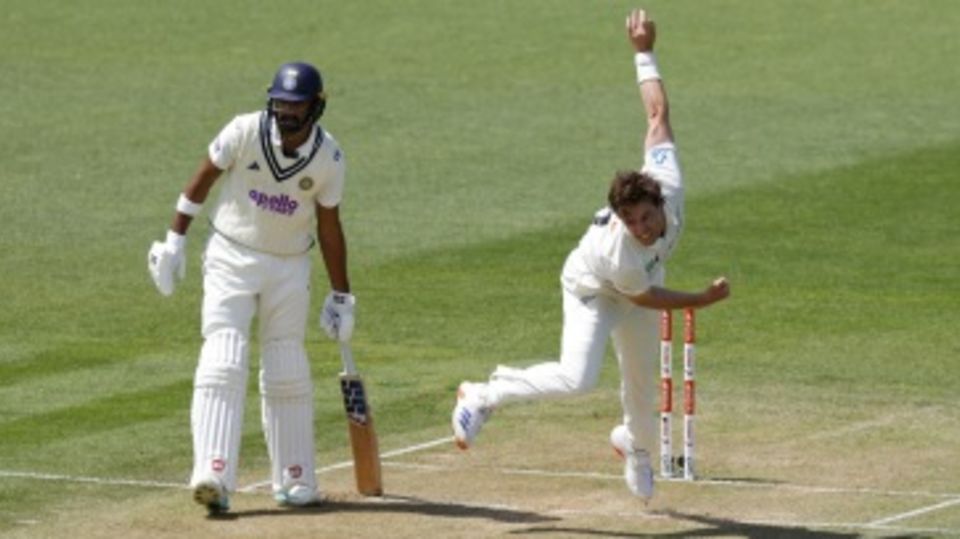


Christchurch is home for Matt Henry. Hagley Oval is his home ground. Across all formats of senior cricket, domestic and international, he's bowled more balls (6225) and taken more wickets (173) here than anywhere else in the world. Of his 153 Test wickets, 40 have come here, at an average of 23.32.
Henry knows this place like the feel of the cricket ball in his hand, fingers running slightly askew of the seam to deliver it with a wobble. And yet, familiarity wasn't quite what he projected when he was welcomed home by the media two days out from the second New Zealand-India Test in Christchurch. Instead, it was a sense of uncertainty, perhaps even worry.
Right at the start of his press conference, he was asked how much he was relishing being back at Hagley.
"Yeah, it's great to be home," Henry said. "Fingers crossed, we can get a little bit of bounce out there, and we're just glad to be here."
Fingers crossed for a little bit of bounce.
Recommended Read



There wasn't a lot of bounce in the pitch at the Basin Reserve, where only 24 wickets fell across 407 overs over five increasingly bat-dominated days of the first Test. There was some seam movement early on - five of those 24 wickets fell in the first 28.2 overs of the match - but little help for bowlers of any description thereafter. And the lack of bounce halved the threat of pretty much every bowler, confining batters' worries to one edge of the bat and minimising the threat of dismissals behind the wicket.
Before the series began, Henry was probably the New Zealand player India most feared. He had shown more than a glimpse of his Test-match threat during the one ODI he played in the lead-up to the red-ball series, taking 6 for 27 in Mount Maunganui including a triple-wicket maiden in his first over. On a pitch offering both seam movement and bounce - and yet far from unplayable, with New Zealand having just made 333 on it - he put on an exhibition of wobble-seam bowling, taking no time to settle into a top-of-the-stumps length, pinning India's batters to the crease, and testing both edges constantly.
Flat conditions can take the sting out of any bowler, however, and Wellington severely blunted Henry's artistry. He troubled India's openers with the first new ball, and could have had KL Rahul lbw with a nip-backer in his fourth over if New Zealand had taken a review, but experienced little joy thereafter. He had keeper Tom Blundell standing up to the stumps for most of the 33 overs he bowled in India's innings, with almost all his energies focused on attacking the stumps and hoping for low bounce and a bit of nibble to beat the inside edge. With no more than one slip in place for most of his overs, and with little likelihood that nicks would carry to that fielder, the other edge felt almost vestigial.
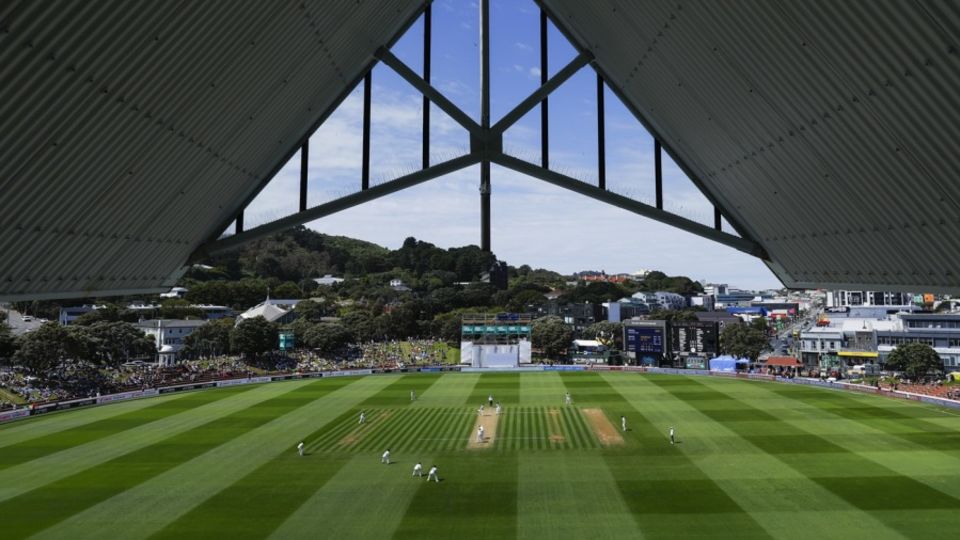
You could understand, then, why Henry responded to that welcome-home question with a prayer for bounce.
As much as events of the past week may have played on Henry's mind, though, he will know - in some part of a mind that seems to instinctively shy away from the spotlight - that he may once again have become India's No. 1 worry. As much as the visitors dominated the Wellington Test, they come here with the scoreline still 0-0. And while he may have looked defanged at the Basin Reserve, India know just how much damage he can do with a bit of assistance from the conditions - whether that means a more helpful pitch, or simply New Zealand winning the toss.
India probably also know how well Henry has done at this ground historically.
His two best bowling innings in Test cricket - 7 for 23 in February 2022 and 7 for 67 in March 2024 - have come here. The first, his first five-for in Test cricket, set up New Zealand's first win over South Africa in nearly 18 years, and played a major role in advancing Henry's case to be a red-ball regular. Before that match, he had played 14 Tests in six-and-a-half years and taken 37 wickets at 46.27. Since that 2022 Christchurch game - with some help from Trent Boult's decision to go freelance later that year - Henry has taken on a full-time new-ball role, and taken 116 wickets in 22 Tests at 20.18.
The second seven-for came against Australia, during a series that he finished with 17 wickets at 15.70, and demonstrated just how lethal he can be when he can bring both edges into play. Nothing summed this up like his contest with Cameron Green, who had scored an unbeaten 174 in the previous Test in Wellington.
At Hagley, Green seemed to have no way to tell which way the ball would nip off the pitch when Henry bowled, and took to stepping out of the crease at every opportunity. Henry pulled his length back to account for this, and continued to move the ball both ways, beating the outside edge twice and smacking Green on the thigh pad in between. Then, having played out two more balls from outside the crease, Green probably felt he had habituated Henry to this new length, and taken bowled and lbw out of the picture. With one ball left in the over, he chose not to shuffle out of his crease.
Almost as if he knew this would happen, Henry pushed his length fuller, nipped the ball in, beat Green's defence, and hit the top of off stump.
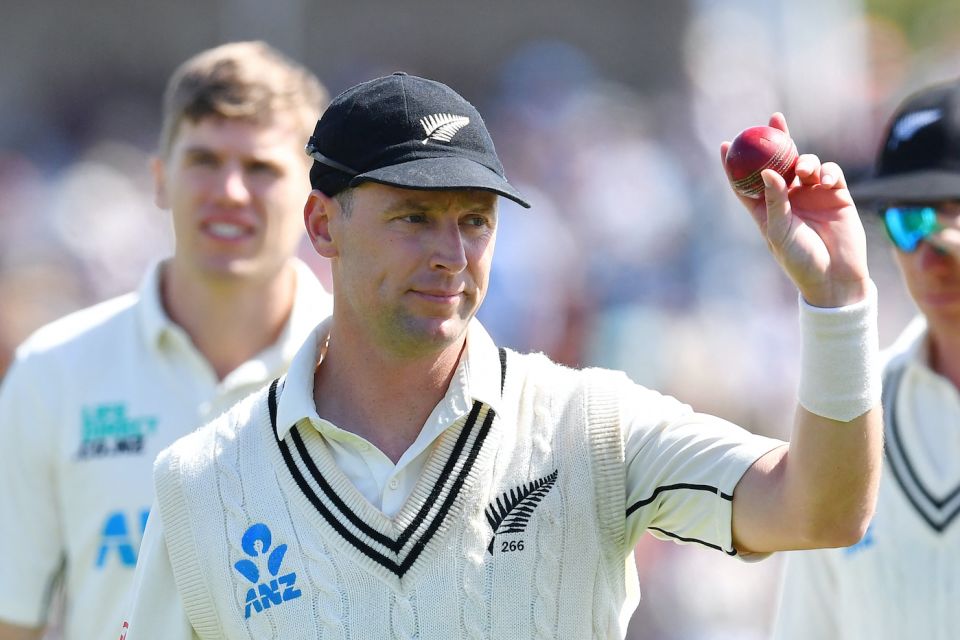
On Wednesday, Henry didn't seem to want to talk about his seven-fors at all. Perhaps the fact that Australia won when he took the second one was still playing on his mind.
"Yeah I think for me it's probably about actually winning games of cricket and winning those moments," Henry said. "It's funny as a player as you look back it's probably not the big wicket hauls but actually the impacts you have and how do you steer a team to win, especially when you're coming into day five and if you can find ways to get your team across the line, those ones really stand out.
"Yeah, obviously, they are performances that I'm really proud of and look back fondly [on] but for me I enjoy the part where you're getting the team across the line and that for me is probably more important."
Henry was cautious when asked what to expect from the Hagley Oval pitch this week, but went into a bit - only a little bit - of detail when asked about how he used the conditions when he took those seven-fors.
"Yeah I suppose those ones were probably putting teams under pressure, especially early on, in making batters make decisions," he said. "When there's a little bit of bounce, using the crease, and I suppose those small little details, you're able to put batters under pressure."
Two days out from the Test match, the Hagley Oval pitch looked green. But so does every Test pitch in New Zealand at that stage, including Basin Reserve last week. It's not yet clear what this greenness will translate to.
But if it means movement for at least a day-and-a-half or two, and if it means bounce and decent carry, we could finally get to enjoy the full spectacle of a Matt Henry Test-match spell. Immaculate lengths, searching lines, clever use of the crease, movement in either direction, and worried expressions on the faces of batters never quite sure of what the next ball will do.