
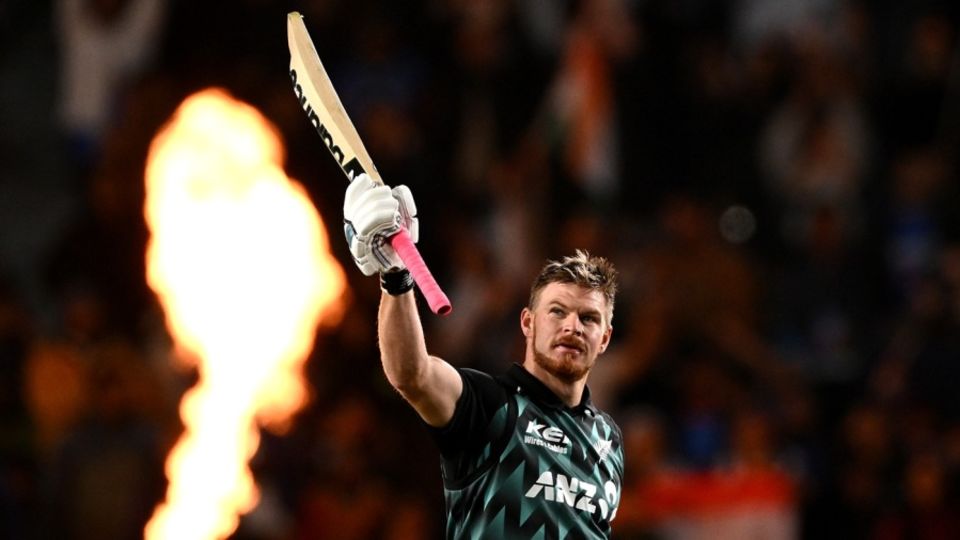


New Zealand 259 for 7 (Phillips 107, Bracewell 65, Mayank 3-48) beat India 172 for 9 (Tilak 35, Duffy 4-23, Santner 2-24, Fisher 2-40) by 87 runs
New Zealand had to break all-time records to be a challenge for India. Glenn Phillips' century and Michael Bracewell with a balls-per-boundary ratio of just over two carried the team to the highest T20 score on these shores, including domestic matches. Faced with a target of 260, India felt scoreboard pressure for the first time and the options they took to dispel it didn't work.
A changed Phillips
For all the highlight reels he produces, Phillips uses orthodox methods to start his innings. He takes it slow, sets himself up and once he's around 30 or so, he explodes. But as a response to batting first at Eden Park, a ground famously chase-friendly, he changed his game.
The second ball he faced was top of off stump but he short-arm pulled it in the air over midwicket. With the powerplay about to end, he moved across his crease to drag a length ball from Prince Yadav into the leg side for four. By that time he was already 26 off 14. He took a while to get to fifty - 31 balls - but his next 10 produced 40 runs.
Nitish Kumar Reddy missed his yorkers. Phillips hit four sixes in a row to produce a 32-run over. Another six - which he knew would go - handed him his century. He was celebrating with the ball still in the air, a long way from hitting the sightscreen.
Bracewell turns it on
Tim Seifert is New Zealand's surprise weapon. He plays 360 degrees but he's had a poor series. So India have been faced with orthodox batters hitting orthodox areas in the field and they've used it to their advantage. Bracewell is not orthodox. He doesn't have a great rate of success but when he comes off, he comes off big.

At Eden Park, he walked in 112 for 4 in the 11th over. India used the match up that was in their favour and it didn't work. Bracwell hit the offspin of Naman Dhir for two fours and a six in the 12th over. Then they gambled with left-arm spin against left-hand batter and it got worse. Bracewell hit Axar Patel for 4, 4, 6, 4 in the 14th over. On the back of just losing a wicket, New Zealand piled on 54 runs in three overs.
The unorthodoxy of Bracewell came to the fore when India turned to their best bowler of the match. Mayank Yadav came steaming in looking for the blockhole in the 17th over and kept getting scooped for six. New Zealand made 84 runs behind the wicket. Nearly 36% of them came off Bracewell's bat at a strike rate of 300. This is what New Zealand had been missing. A batter who posed a different threat.
Bracewell hit 10 boundaries in 25 balls. The partnership produced 115 runs in 41 balls.
Duffy's impact
Hitting the middle of the pitch and benefitting from a little variation - whether it is extra bounce or the ball holding up a touch - is one of the best defensive ploys a fast bowler can use in batter-friendly conditions. Jacob Duffy hasn't really been keen to do that.
Then he saw Sanju Samson effortlessly hitting the first ball of the chase - pitched up - for four. Immediately he went for his bouncer and took Samson out. In this series, Duffy has bowled a good length or fuller (25 balls, 52 runs, two wickets) twice as many times as he's gone short (13 balls, 23 runs, two wickets). He was late to get clued in but once he was, he finished with 4 for 23.
Scoreboard pressure
India's batters play like they're immune to scoreboard pressure. On Friday, they felt it. Abhishek Sharma was tied down by balls at his pads. New Zealand were desperate not to give him his hands. He was 16 off 10. Then Matt Fisher started angling the ball across the left-hander, letting him unleash that free-flowing swing of his bat.
But with 259 on the board, the bowling side could afford these mistakes and Fisher showed the wherewithal to do the one thing that a bowler absolutely has to in T20 cricket. Complicate run-scoring. He went cross-seam. He generated extra bounce. Abhishek caught the ball high on the bat despite its free-flowing swing and was dismissed.
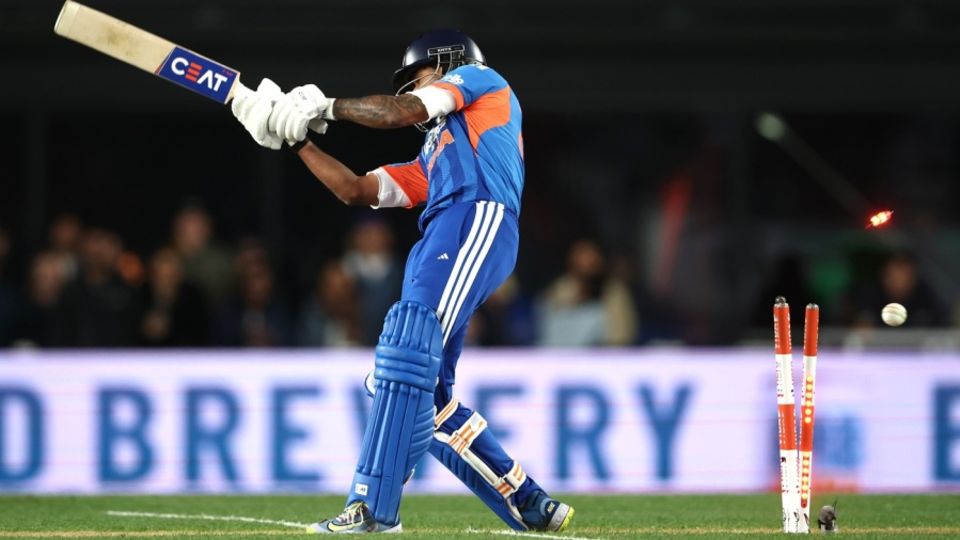
Scoreboard pressure accounted for Shreyas Iyer as well. Desperate to make the most of the last over of the powerplay, he gave up his stumps to be bowled. The mis-hits and miscalculations resulted in wickets at Eden Park. In Wellington, they didn't. New Zealand's bowlers did better, of course. They went hard length, they mixed up their pace and made it riskier to play the big shots. But the key was the outrageous total they had on their back. Cricinfo's forecaster had them nearly 96% favourites at the end of the first innings. They just needed to close the game out.