
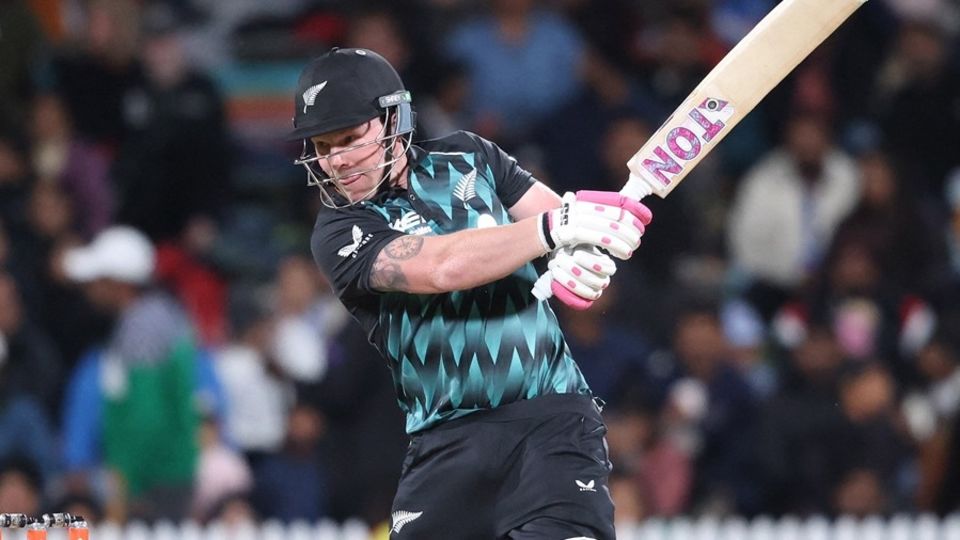


New Zealand 195 for 3 (Seifert 93, Phillips 65*) beat India 191 for 8 (Kishan 61, Iyer 50, Milne 4-19) by seven wickets
The tall New Zealand quicks restricted India to 191, and Tim Seifert's return to runs led their chase to give the hosts another consolation win after having fallen behind 3-0 in the five-match series. New Zealand continued to be generous in the field, dropping two catches and taking a wicket off a no-ball, but it was the one dropped chance by India this time that proved to be crucial. Seifert would have been out for 13 off 15 had Naman Dhir, a beneficiary of dropped catches himself, taken the sitter in the fourth over.
What followed was carnage from both ends as Seifert ended with 93 off 50 and Glenn Phillips added another half-century to aggregate the most runs for anyone in a bilateral series, 341. India didn't quite have the bowling resources ideal for the conditions in Hamilton, and the pitch also settled down in the night.
In the first half, New Zealand extracted considerable variation by going into the pitch after Ishan Kishan and Shreyas Iyer had added 93 runs in just 7 overs to take India to 112 for 2 in 10.1 overs. Amid dropped catches and no-balls, though, Nathan Smith and Blair Tickner kept getting wickets before Adam Milne finished with two wickets at the death to go with the scalps of the openers in the powerplay.
Milne, Duffy on the money
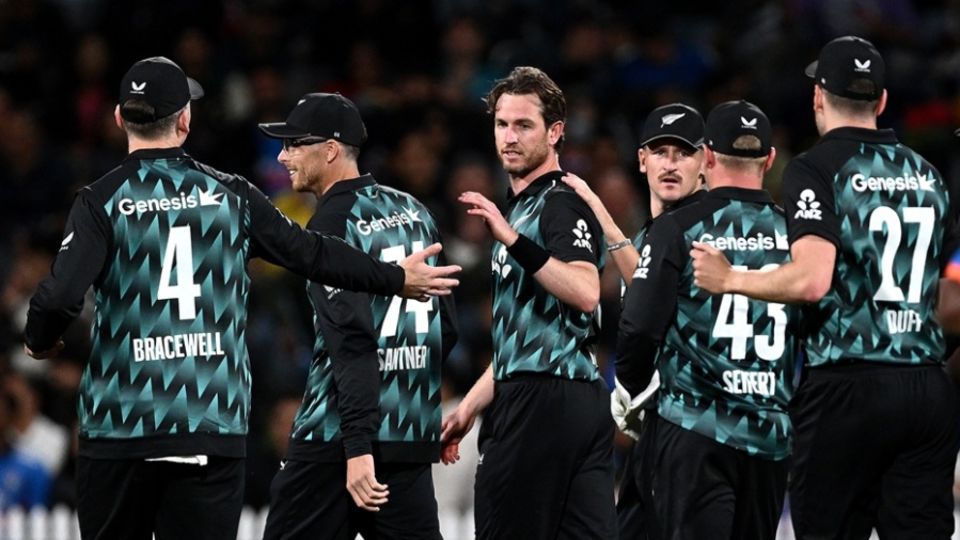
Jacob Duffy has travelled a bit this series, but gave New Zealand a good first over second time in a row. He bowled just short of a good length, and drew seam movement. Sanju Samson played five balls for one runs, which was followed by Abhishek Sharma trying to hit Milne out of the ground first ball. The skier ended up with Daryl Mitchell at mid-on. The bowlers kept Samson stifled even as Kishan got away, which brought about a leading edge to make it 19 for 2 in 3.1 overs.
Kishan, Iyer rise above conditions
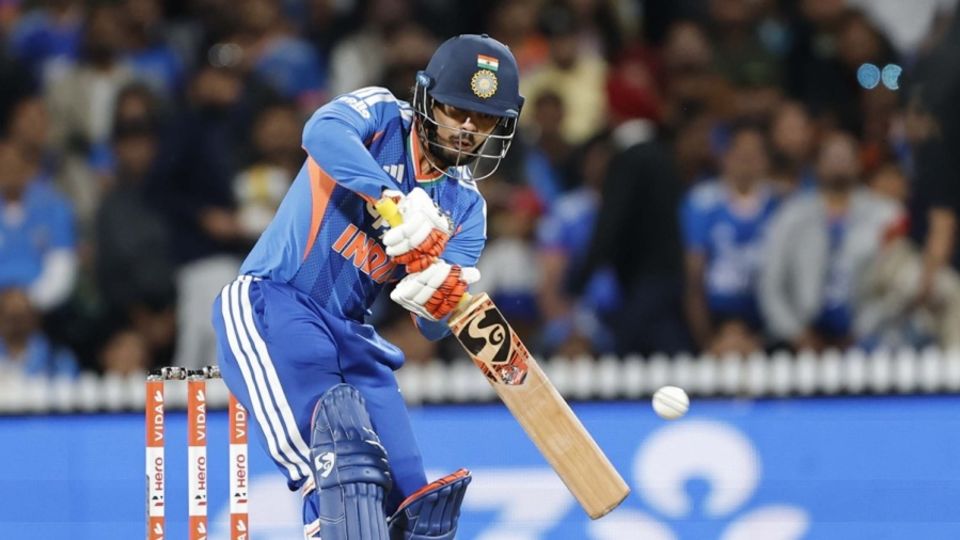
Apart from the odd loose ball, like the leg-stump half-volley Iyer got from Smith first ball, New Zealand didn't do much wrong, but India's Nos 3 and 4 ran away from them. They made sure the spinners didn't even get a sniff, taking 61 runs in overs seven to 10. This also included a sensational effort from Finn Allen at long-on where half a frame proved to be the difference between Kishan's wicket and a six. It also included Tickner's reprieve to Iyer in the middle of a Michael Bracewell over that went for 27.
Seamers drag India back
Tickner was asked to lie in the bed that he made, and he responded with the wicket of the rampant Kishan for 61 off 32. This was actually in Kishan's swinging arc, but a bit of extra bounce hit the higher part of the bat and resulted in a boundary catch. Excited by the extra bounce, Smith also bashed the middle of the pitch, drawing a top edge from Iyer, who had just brought up his fifty in 22 balls.
In his next over, Smith had Tilak Varma but overstepped by the proverbial inch. He not only recovered to concede just the single off the free hit, but proceeded to produce a caught and bowled off another short ball.
Playing Varun Chakravarthy for the first time this series, India were now looking at their last recognised pair for the last 6.2 overs. New Zealand could have got into the tail even before the death overs had Milne not dropped Dhir in the 16th. He could be excused, though, as he returned figures of 4-0-19-4 despite bowling only in the powerplay and at the death.
Another slow start for New Zealand
At least one of the openers' lack of fluency against the new ball has been a constant for New Zealand throughout the series. Bhuvneshwar Kumar bowled a tight first over, which was followed by a top edge from Finn Allen in the second. Seifert was still struggling for his touch when he offered the second catch, which would have made it 17 for 2 in 3.2 but Dhir shelled it at deep point.
This time New Zealand make India pay
It is highly likely New Zealand would have won the second T20I had they not been generous with dropped catches and no-balls. This time, they cashed in on the mistake from India. The remaining 15 balls of the powerplay produced 41 runs including five sixes. Seifert just started hitting everything straight now; two of his sixes off Bhuvneshwar ended up at the same spot in the camera gallery.
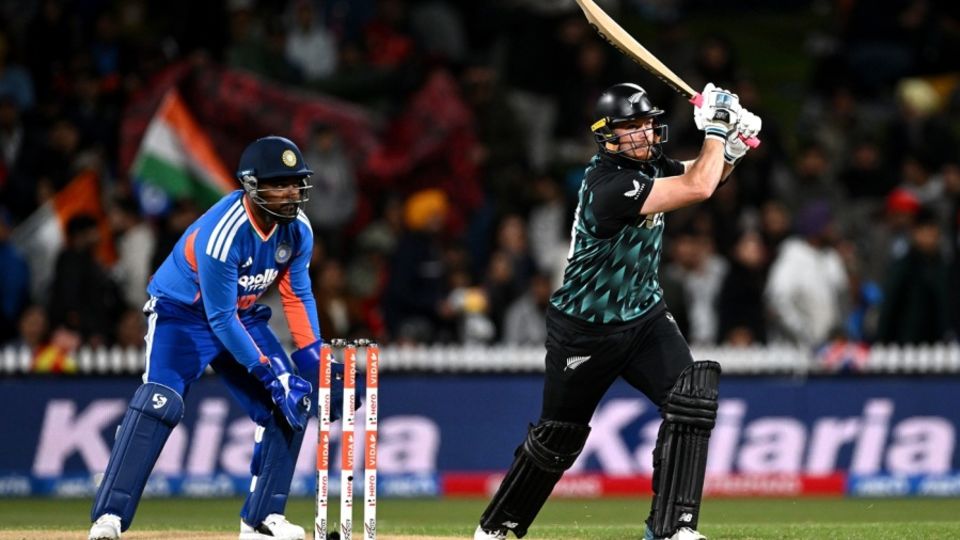
The momentum continued with a six each for Daryl Mitchell and Seifert in the seventh and eighth overs, but Abhishek pulled off a special catch diving forward at long-off to send Mitchell back. At this time New Zealand needed 111 off 69 balls, which began to look challenging as Varun troubled Phillips at the start of his innings.
The next two overs, though, were bowled by Nitish Kumar Reddy and Abhishek, and produced 25 runs. Iyer hadn't yet bowled any of his fifth bowler's quota in the first nine overs so it is understandable he went to it the moment he got a wicket, but bowling two in a row was almost a throw of the dice especially on a pitch friendly to seam bowlers more than spinners.
Arshdeep came back, pulled things back with just three off the first four balls of the 12th over, but consecutive fours from Seifert at the end of the over turned the momentum irreversibly towards New Zealand. Even Varun lost his length, going for 31 in his last two. Seifert and Phillips were now middling everything, but an inside edge off Reddy ended Seifert's innings seven short of what would have been a maiden T20I hundred.
Phillips, though, continued his record-breaking run and made sure there were no hiccups in the home stretch.