

Where does cricket begin and end? If you're a professional player, in the pavilion. It's the venue for post-win parties in dressing rooms, a place of refuge after a long day's play, and a surprisingly long walk away if you've just picked up a golden duck.
Of all the pavilions in cricket, none are more recognisable than the one at Lord's. After the original structure burned down in a fire, the pavilion as we know it today was built in 1890 at a cost of £21,000 (approx £3 million today). In the photo above, it catches the last rays of the sun on the day India first took home the World Cup, in 1983.
Lord's was also one of the venues for the 2012 Olympics, when it hosted the men's and women's archery events, and the members' pavilion was turned into a bandstand for the occasion.

England has long had a monopoly on some of the prettiest pavilions in cricket, be it the big-name grounds or village greens - take a gander at the one in Bridgetown, Somerset.

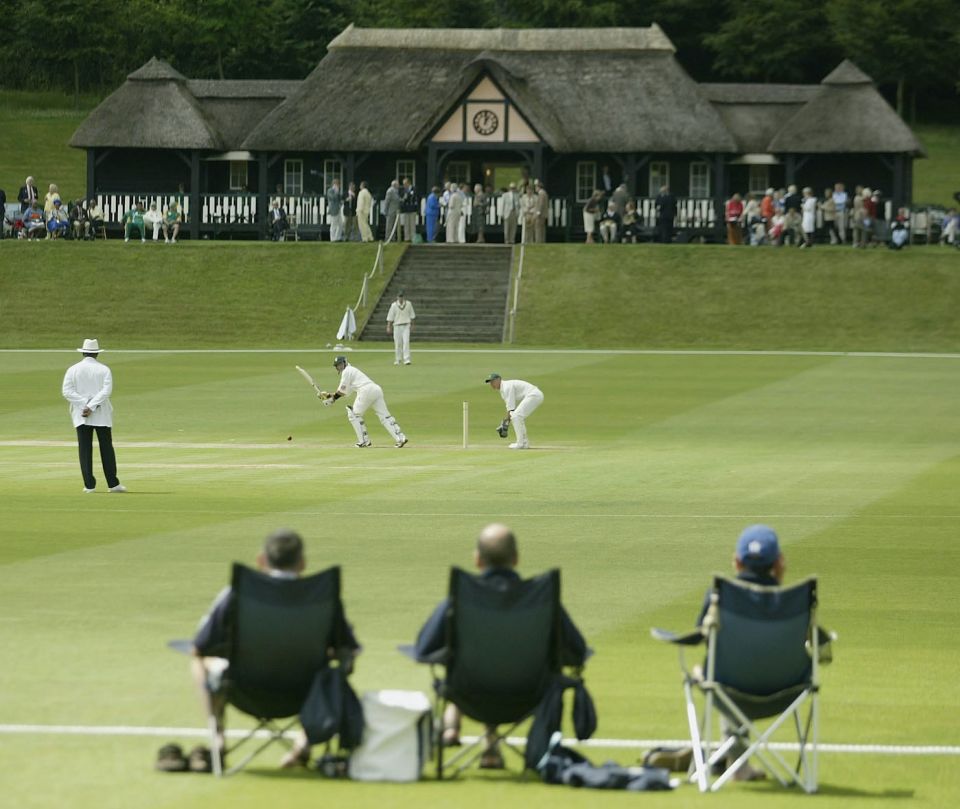
But some flatter to deceive, like the one in Wormsley, at the Getty family estate. It is one of the most stunning cricket grounds but don't be fooled by the twee thatched roof and faux-Tudor facade of the pavilion - it was built in 1992 after Mick Jagger piqued Paul Getty's interest in cricket.
So important was a pavilion to the Sutton Cricket Ground - they hadn't had one since 1858 - that in 1865 they bought the old Sutton Railway Station waiting room and had it installed at the ground. It stood for nearly four decades before it was destroyed in the Blitz and a new one constructed in 1955.

Castle Ashby House's pavilion is straight out of a fairy tale - Hansel and Gretel, maybe.

Recommended Read


The many pavilions at Azad Maidan in Mumbai may not win any beauty contests but the snacks offer some stiff competition.

But can they compete with the famous tea-time cakes of the Ladies Pavilion at New Road?

Bombay Gymkhana, one of the oldest members' clubs in India, was built in 1875 and remains extremely difficult to get into. But it's prettier from the outside anyway.

But history gives way to geography when the player has to map his way back to the green room after an ignominious dismissal.

So dreaded is that walk of shame back that players would rather the ground open up and swallow them whole, which is exactly the idea a cartoonist had in the early 1900s.
